
 Winifred Nwania
There’s a lady I know who works with me. She has always had very beautiful hair, the kind of hair that makes hairdressers nervous. Long, full, thick, the kind that turns heads when she lets it down. It has been that way since she was a child, and honestly, she wore it like a quiet crown. It was one of those things she never had to think about. It was just there, growing, healthy, hers.
Then, somewhere in her teenage years, something shifted.
Her hair started to break. Not a little. A lot. It would grow beautifully,2 long and strong and full, and then, almost without warning, snap.
Strand after strand, section after section. She would work her hand through her hair and find clumps of hair in her hands. She would comb it gently and watch clumps come away in her hands. The hair she had always trusted to just be there was now falling apart in front of her.
She tried everything. She stopped making her hair as often, thinking maybe the styling was too harsh. She switched products, gentle shampoos, deep conditioners, oils that promised restoration. She changed hairdressers. She tried protective styles. She left it alone entirely, hoping that if she just stopped touching it, the breakage would stop.
It did not stop.
For years, she lived in this cycle. Growth, then breakage. Growth, then breakage. Every time the length came back, the breaking followed, like something inside was refusing to let the growth hold. And the frustration of it, watching something that used to flourish now constantly deteriorating, that wore on her in ways she did not fully understand at the time.
Then one day, as an adult, she discovered the truth. She had an iron deficiency. Her diet had been terrible for years. She was eating sparsely, skipping meals, constantly stressed, barely giving her body what it needed to function, let alone sustain the kind of growth her hair required. Her body, starving for nutrients it was not receiving, had started redirecting what little it had to the organs that needed it most. And her hair, being non-essential for survival, was the first thing to be sacrificed.
The breakage was never the real problem. It was the symptom.
The real problem was happening on the inside, invisibly, silently, for years before the evidence showed up on the outside. She was not losing hair because of bad products or rough styling. She was losing hair because she had stopped feeding properly.
The moment she understood that, everything changed. She started eating intentionally, taking her iron supplements, prioritising her nutrition. One morning she was rushing out for work, not hungry, tempted to skip breakfast, and then she stopped herself and thought,
“If I do not eat, my hair will break.”
So she packed her food, packed her iron, packed everything, because she understood that the thing she valued was directly connected to the thing she was feeding it.
And her hair responded. Not overnight, but steadily, visibly, undeniably. Because when you feed the root, the fruit takes care of itself.
I share this story at length because it is not just a story about hair. It is a mirror. And what you are about to see in that mirror might be uncomfortable.
Your Purpose Is Breaking. And You Are Blaming the Wrong Thing.
Over the past month, in our Mapping Month series, we covered a lot of ground together. You identified your purpose. You built your 7-step plan. You learned about mental grit and patience. You have the foundation, the direction, and the resilience.
But some of you are still watching your purpose break.
You are putting in the effort, but the results are not matching. You feel like something keeps snapping just when things start to look promising. And you have been blaming the wrong thing. You think the problem is your strategy. Your timing. Your platform. Your audience. Your resources.
It is not.
The problem is the same one my friend had with her hair. You have stopped feeding the thing that sustains the growth. And now your purpose, your career, your vision, is breaking from the inside out, and you are trying to fix it with external solutions when the deficiency is internal.
This is what Mastery Month is about.
In our M4 framework, Mindset was about renewing your mind. Mapping was about charting your direction. Now, Mastery is about feeding the growth. Developing the specific skills, knowledge, habits, and competencies that your purpose needs to actually thrive, not just survive.
And I need to start this month by telling you something that most people treat far too casually: Your growth is not dessert, it is oxygen.

Most people treat their personal growth the way you treat dessert at the end of a meal. It is sweet. It is pleasant. It is something you enjoy when there is time and space, when the mood is right, when you can afford the luxury of learning something new.
“I will take that course when work slows down.”
“I will read that book when I have a free weekend.”
“I will invest in my skills when I have some extra money.”
You treat growth like it is optional. Something that enhances life but is not essential for survival.
Let me dismantle that right now.
Growth is not dessert. Growth is oxygen.
Think about oxygen for a moment. Your brain, the organ that runs every single function of your life, cannot survive four minutes without it. Four minutes, and irreversible damage begins. Your cells start dying. Your organs begin shutting down. Four minutes.
That is the level of urgency you need to bring to your growth. I’m not being dramatic, the consequences of not growing are just as real as the consequences of not breathing. They are just slower. And that slowness is what makes them so dangerous, because by the time you notice the damage, the decay has been happening for months, sometimes years.
Here is what happens biologically when you stop learning, stop being challenged, stop stretching beyond what you already know. Your brain stops forming new neural connections. The pathways that once made you sharp, adaptable, and innovative start to weaken. Neuroscience calls this neuroplasticity, the brain’s ability to reorganise itself by forming new connections in response to new experiences. When you learn something new, practice a skill, or push yourself into unfamiliar territory, your brain physically changes. New synapses form. Existing pathways strengthen. Your capacity expands.
But when you stop? When you settle into routine, scroll through the same unfruitful content, avoid anything that challenges you? A fixed mindset creates neural pathways that reinforce stagnation. Your brain does not just pause. It declines. And decline is just a polite word for dying.
The same principle applies to your spirit. When you stop spending time in prayer, in the Word, in the presence of God, your spirit is not on hold. It is starving. And a starving spirit cannot sustain a thriving purpose. You can feel it when it happens. That flat, soured, out-of-sorts feeling after days of neglecting your relationship with God. That is not just guilt. That is a signal. Something inside you is not being fed, and the decay has already begun.
You have heard people say, “If you are not growing, you are dying.”
Most people hear that and think it is motivational language. It is not. It is biology. It is spiritual reality. And it is the reason your journey towards purpose keeps breaking despite all the passion and planning you have put into it.
You are starving it of the one thing it cannot survive without: growth
Are You Feeding Your Purpose or Starving It?
Growth is a daily practice, not a once-in-a-while luxury. I created a free Excellence Growth Tracker you can print and stick on your wall. Three areas. Thirty days. Three checkmarks a day. Watch which areas are thriving and which are starving.
Growth Is Your Most Powerful Offensive Weapon

When you discover this about growth, you will never approach your growth the same way again. Listen to this:
There is a powerful illustration in a book called The Final Quest by Rick Joyner that completely reframed how I think about personal and professional battles. He describes soldiers on a battlefield locked in fierce combat with the enemy. The fighting is intense, relentless, overwhelming. Bodies everywhere. Chaos consuming everything.
But the key to gaining a decisive advantage was not what you would expect. It was not about fighting harder on the flat ground. It was about climbing a nearby mountain.
The higher the soldiers climbed, the less vulnerable they became to the attacks below. And the more devastating their vantage point became against the enemy. From the top of the mountain, the same battles that had been tearing them apart at ground level could no longer reach them. They had risen above the enemy’s range.
But here is the part that broke my heart when I read it. Many soldiers never climbed. They were so consumed by the immediate chaos, the incoming fire, the urgency of the battle right in front of them, that they could not lift their eyes to the mountain. They stayed at the base, fighting the same fight, taking the same blows, day after day. And the enemy kept destroying them.
That is precisely how most of us live.
You are so consumed by today’s financial fires, the heavy workload, the stress, the bills, the crises, that you short-change your long-term growth with perfectly logical excuses:
“I do not have time to study.”
“I am too overwhelmed to plan.”
“I have been through a lot today, let me just chill with Netflix for 12 hours.”
And every time you choose comfort over expanding your knowledge, your skills, and your expertise, you send a clear message to your future:
“I would rather stay at the base of the mountain fighting the same battles decade after decade.”
The cure is not to fight harder at ground level. The cure is to climb.
When you grow, when you build new skills, deepen your knowledge, sharpen your competencies, you reach an elevated level where the crises, limitations, and ground-level noise that used to paralyse you can no longer reach you.
You become completely alien to the battles you used to fight. Not because the battles disappeared, but because you outgrew them.
Think about it practically. Many of the financial pressures you are fighting right now exist because your skills, your knowledge, and your capacity have not grown beyond the level that produces your current income.
If you grew your communication skills, your ability to lead, your professional competence, your personal brand, you would reach a level of earning and influence where those same financial fires would not exist anymore. You would have outgrown them.
That is what I mean when I say growth is an offensive weapon. It does not just keep you alive. It wins the war.
The “Both Hands” Strategy
Now, I know what some of you are thinking.
“Miss Winnie, that sounds wonderful, but I am drowning in real problems right now. I cannot just ignore my daily battles to go and grow.”
I am not asking you to ignore them. I am asking you to stop giving them both hands.
Here is the strategy: handle today’s immediate fire with one hand, while keeping your other hand locked on your growth.
Yes, you have bills to pay. Pay them. But with your other hand, you are taking that communication course that will open doors your current skill level cannot open.
Yes, you have a demanding job. Show up for it. But with your other hand, you are building the personal brand that will ensure that your value and potential influences other people beyond just your office, church or school.
That is exactly what the Art of Personal Branding course is designed to help you do, because the hard truth is this:
Nobody can buy what you are selling, whether it is a service, a skill, or a message, if nobody knows you exist!
Yes, life is stressful. Handle the stress. But do not let the stress at the base of the mountain consume you so completely that you stop climbing the mountain of growth.
Both hands. Always. One on survival, one on growth. The moment you take your growth hand off the mountain to fight another ground-level fire, you stop climbing. And people who stop climbing stay at the base forever.
Eat and Sleep Like a Baby
So if growth is the strategy, how do you actually do it? Let me give you the simplest, most powerful framework I know.
Eat and sleep like a baby!
You didn’t read that wrong. Think about a baby…
Out of all the creatures on earth, babies grow the fastest. In the first year of life alone, a baby’s brain doubles in size. By the time a child turns three, their brain has formed over one million new neural connections every single second.
Their bones are lengthening, their muscles are forming, their organs are maturing, their immune system is building. In 12 months, a human baby goes from a tiny person that cannot hold up its own head to one that is walking, babbling, recognising faces, forming memories, and beginning to understand language. The rate of development is staggering!
And how does a baby accomplish all of this? Two things. Just two.
They eat constantly. And they sleep deeply.
Let me show what I mean, because this is where it gets fascinating:
When a baby eats, the nutrients from that food are broken down and distributed to every system in the body. Proteins are converted into amino acids that build muscle tissue and organ cells.
Calcium and phosphorus are directed to the bones, making them longer and denser. Iron fuels the production of red blood cells that carry oxygen to the brain. Fatty acids, particularly DHA, are used to build the brain itself.
But here is the part most people do not realise:
Eating alone does not produce growth. The real growth happens during sleep.
When a baby sleeps, the body shifts into construction mode. Growth hormone is released, and the body uses that hormone to convert the nutrients consumed during the day into actual tissue, bone, and brain architecture.
During sleep, memories from the day are stored and consolidated. Brain synapses, the connections between neurons that form the basis of everything a child will eventually know and do, are formed and strengthened.
The connections between the left and right hemispheres of the brain are wired together. In fact, babies spend up to 80% of their sleep in active REM sleep, the phase where the brain is most busy, literally laying down the tracks for everything it is learning.
Sleep is not just rest for a baby. Sleep is the construction site where the body takes the raw materials from food and builds them into a human being.
Now, apply that to your growth.

Eating means consuming knowledge.
Read the books. Take the courses. Sit under mentors. Listen to people who are further ahead than you. Study your craft. Feed your mind with material that directly serves your purpose and your goals. Not random content. Not just constant entertainment disguised as learning. Targeted, intentional intake that matches where you are headed.
If your purpose requires you to speak with clarity and confidence, you need to eat communication skills. That is why we created the Art of Effective Speaking and Communication for those ready to build their communication skills. It’s not a generic course. But a strategic tool designed to help you master effective communication
If your purpose requires financial wisdom, you need to eat financial literacy. Our Financial Empowerment course will give you the knowledge and skills that transform financial chaos into a strategic tool for building generational wealth.
Sleeping means processing and execution.
And this is the part that most high-achievers skip entirely.
You cannot just consume endlessly without giving yourself time to integrate what you have learned. Processing looks like reflection, journaling, meditation, holding the knowledge you’ve just learned at the center of your mind until you have become one with it.
Practise what you have studied in real situations. Giving your mind and spirit the space to convert raw information into actual capability.
A baby who eats but never sleeps will not grow properly. Its body will have all the raw materials but no construction time to turn these nutrients into building blocks and as a result the baby will experience a metabolic breakdown.
Sounds familiar? Yes. That’s because it also has another name: Information overload.
Information overload single-handedly cripples more people than fear ever has because it induces decision & execution paralysis and a scattered focus.
And a person who consumes courses, books, podcasts, and sermons endlessly but never stops to reflect, apply, and practise will end up the same way:
Someone who knows a lot but has no results to justify the knowledge they claim to have.
The Death That Nobody Notices
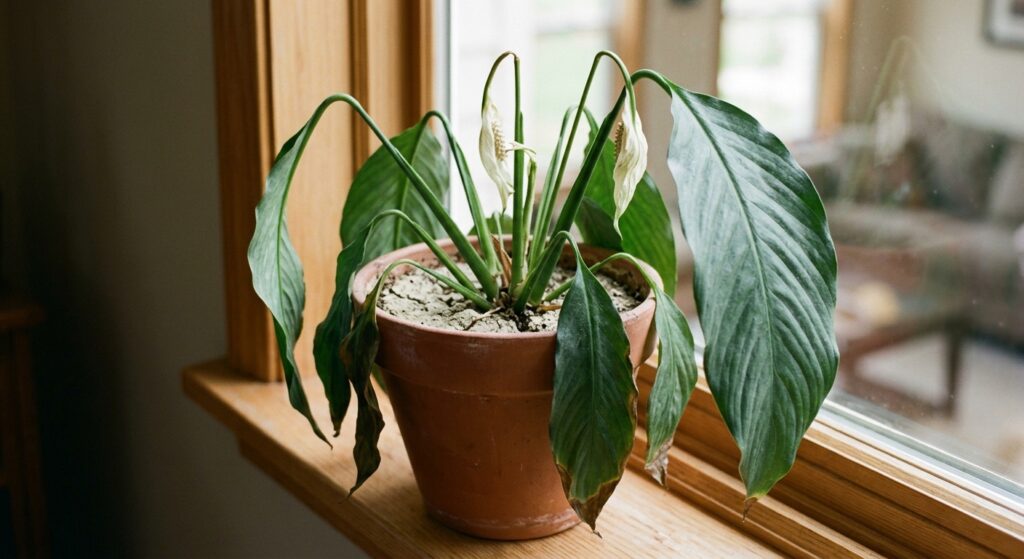
One word describes the devastating effects that occur when growth stops or becomes lopsided
it’s called death, and I am not talking about physical death, though we will get there.
I am talking about a different kind of death. A quieter one. One that happens on the inside long before it ever shows on the outside.
When you neglect your growth, here is what dies first:
Your joy dies. Not all at once, but gradually. A flatness settles in. Things that used to excite you start to feel like obligations. You cannot explain why, but life starts to feel heavy, grey, repetitive. That is not just a bad season. That is a symptom of internal stagnation.
Your passion to press dies. The fire you once had for your dreams starts to dim. You still talk about them, but the urgency is gone. The fight is gone. You find yourself saying, “I will get to it,” and you never do. That is not laziness. That is a dying drive, suffocated by a mind and spirit that are not being fed.
Your vision dies. You stop dreaming. You stop imagining. You stop believing that the bigger life is possible. And without vision, as the scripture says, people perish. Not because God removed the vision. But because the internal environment that sustains vision was not maintained.
And here is what the research tells us: this internal death does not stay internal.
A landmark study published in the journal Science established that depression and psychological decline do not just affect your mood. They directly reduce your ability to work, earn, and make sound financial decisions.
The researchers found that mental illness worsens economic outcomes because it “directly affects the way people think,” causing diminished belief in one’s abilities, excessive rumination, and distorted memories about what one is capable of achieving.
Another major study found that people experiencing financial strain were significantly more likely to develop depression, and that depression in turn further worsened their financial outcomes, creating a vicious cycle where the internal decline feeds the external decline, and the external decline deepens the internal decay.
In other words, the death that starts on the inside, the loss of joy, the loss of passion, the loss of drive, that death eventually shows up in your bank account, in your health, in your relationships, in your opportunities. By the time you notice the external symptoms, the internal decay has been running for a long time.
Your environment is your looking glass. What you see on the outside is a reflection of what has been happening on the inside. And if what you see on the outside is stagnation, lack, and frustration, the first place to look is not your circumstances. It is your growth.
What An Abundant Life Really Means

I want to speak directly to those of you who are believers, because this matters deeply.
When Jesus said, “I came that they may have life, and have it abundantly,” He was not only talking about life after death, and He was not only talking about material abundance. The word He used carries the idea of life to the full. Life overflowing. Life that is thriving in every dimension of your being.
That means life in your spirit: a living, active, fed relationship with God.
Life in your soul: a mind that is growing, learning, becoming sharper, wiser, more capable.
And life in your body: health, energy, physical vitality.
The abundance you see in someone’s environment, their influence, their finances, their impact, that is a reflection of the abundance that is already happening inside them. The external is always a mirror of the internal.
Now, when the Bible says that the thief comes to steal, kill, and destroy, most of us think of the dramatic external attacks. We think of stolen finances, sudden illness, job loss, broken relationships. And yes, those are real. But here is what I have come to understand: those are the final blows, not the first ones.
The thief does not start by attacking your bank account. He starts by stealing your joy. He starts by stealing your time, because he knows that if you do not have time, you cannot pray, you cannot study the Word, you cannot receive the strategies from God that you need for a successful life.
He steals your passion to push through, because he knows that without that fire, you will not discipline yourself to grow in the areas that would make you unstoppable. He steals your desire to learn, to stretch, to build new skills, because he knows that growth is the very thing that would elevate you beyond his reach.
By the time your finances collapse or your body shows symptoms, the real stealing happened a long time ago. On the inside. Quietly. In the area of your growth.
So when I say growth is oxygen, I am not speaking metaphorically.
As a believer, an abundant life, spiritually, mentally, professionally, bodily is literally the abundant life that Jesus came to give you. And every day you neglect it, you are living below what was promised to you.
Now, I want to say something important here. I am not saying that every sickness or financial hardship is caused by neglected growth.
My heart truly goes out to those who are ill, and I pray for speedy recovery and supernatural restoration.
What I am saying is that there is a dimension of abundant living that is directly tied to how faithfully we steward our growth. And many of us are living far below the abundance that is available to us, not because God is withholding, but because you stopped consuming and applying the knowledge that will show you how to multiply and sustain an abundant life.
Are You Running on Heels?

I was rushing somewhere recently, trying to quicken my pace, when I suddenly realised I was wearing four-inch heels. And as athletic as I consider myself to be, the reality hit me fast:
You cannot run in heels. You can walk in them. You can look elegant in them. You can stand tall and feel powerful in them. But the moment you need to move with speed and urgency, heels will either slow you down or break your ankle.
And it struck me: that is how some people are trying to run their purpose.
They are running on heels. On vibes. On self-confidence alone. On the belief that because they are smart and capable, they do not actually need structured guidance or investment in their development.
They see a course taught by someone who has the skills and the results, someone who has done what they are trying to do, and instead of investing in that proven pathway, they say,
“I will just Google it. I will YouTube it. I will ChatGPT it.”
And look, I am not dismissing resourcefulness. Information is more accessible than it has ever been. But here is what you cannot Google: experience.
Here is what you cannot YouTube: applied wisdom.
Here is what AI cannot give you: the accountability, the community, and the personalised correction that comes from learning under someone who has walked the road before you.
Those four-inch heels of pride look beautiful. They give you a perception of sophistication and independence. But they are not built for running. And if you try to sprint toward your purpose in them, you will either stall or injure yourself.
Take the heels off. Put on running shoes. Invest in the guidance, the mentorship, the structured learning that will actually get you where you need to go. It will save you years and guarantee that you arrive at your destination faster and with fewer injuries.
This is what the Excellence Elite community is for. It is not just a group. It is a running track with coaches and fellow runners who are all going in the same direction. The accountability, the feedback, the direct access, that is what accelerates growth beyond what you can achieve alone. Join the Excellence Elite Community today
And if you are at a point where you need personalised, one-on-one guidance, where your situation is too complex for general advice and you need someone to sit with you and build a strategy tailored to your exact season, that is what the Vision-to-Reality 1-on-1 Consultation is for. Click here to book a session with me
Growth Requires Daily Reps
If you are serious about making growth a daily practice, do not leave this to memory. Download the free Excellence Growth Tracker, print it, stick it where you can see it, and check off your growth in three areas every single day. Thirty days from now, you will not be the same person.
The Knowing-Doing Gap
There are people who can quote every motivational speaker, reference every business book, recite every scripture, and still have nothing to show for it. They sound intelligent. They sound knowledgeable. In a conversation, they will impress you with how much they know. But their results do not match their vocabulary.
Why?
Because they ate but never slept. They consumed without processing. They accumulated information without ever converting it into applied wisdom. And information without application is just intellectual decoration.
Knowledge tells you what to do. Wisdom shows you how and when to do it. And wisdom only comes through the process of applying what you know, failing, adjusting, and applying again. That process, the messy, uncomfortable, trial-and-error process of actually doing the thing you have been learning about, that is the “sleep” phase. That is where the raw materials of knowledge are converted into the living architecture of competence.
If you have been learning for years but your life has not changed, the problem is not that you need more input. The problem is that you need more integration. Stop consuming and start applying. The growth you are looking for is not in the next book or the next course. It is in what you do with the ones you have already taken.
Welcome to Mastery Month
Over the past two months, we laid the foundation. You renewed your mind. You mapped your direction. You discovered your purpose, built your plan, and developed the grit and patience to sustain it.
Now, it is time to build.
Mastery Month is about developing the specific skills, habits, and competencies that will move you from knowing what you are called to do to actually being equipped to do it with excellence. Knowledge alone is not enough. Mastery bridges the gap between knowing and doing. It prepares you to navigate challenges, seize opportunities, and show up at a level that matches the size of your calling.
And it starts with one decision: to stop treating your growth like dessert and start treating it like oxygen.
Eat like a baby. Consume the knowledge, the courses, the mentorship, the Word, with the same relentless appetite a newborn brings to every feeding.
Sleep like a baby. Give yourself the space to process, reflect, practise, and integrate what you have consumed so it becomes part of who you are, not just something you know.
Climb the mountain. Keep one hand on today’s battles and the other hand locked on your growth. Do not let the chaos at the base consume you.
And for the love of everything you are building: Take off the heels. Invest in the guidance and structured learning that will actually get you where you need to go.
Because the moment you stop growing is the moment everything you have built starts to die.
And you have come too far for that.
You Do Not Have to Grow Alone
One of the fastest ways to accelerate your growth is to surround yourself with people who are growing too. That is the purpose of the Excellence Elite community.
It is a space where people who are serious about mastery come together to share what they are learning, hold each other accountable, and push each other higher up the mountain.
When you are growing in isolation, it is easy to stop. When you are growing in community, the momentum is contagious.
Click here to join the Excellence Elite Community today
And if you are ready to invest in specific mastery skills right now. Explore our catologue of strategic tools tailored to help you achieve your goals and live a successful life:
- Communication (Foundation): Art of Speaking Eloquently and Elegantly
- Personal Branding: The Art of Personal Branding
- Financial Growth: Financial Empowerment by Sola Adesakin
In the next post, I am going to go deeper into one of the most overlooked mastery skills of all: the art of building a personal brand.
Not just for social media, but for your entire life. Because the opportunities, the partnerships, the wealth, and the influence your purpose needs to fulfil its assignment cannot find you if nobody knows you exist.
I’ll see you in my next post!💖
Key Takeaways
- Growth is not dessert. It is oxygen. When you stop growing, your brain stops forming new neural connections, your skills stagnate, your spirit starves, and your purpose slowly suffocates from the inside out.
- Growth is an offensive weapon. The way to end the battles you keep fighting at ground level is not to fight harder but to climb the mountain. When you grow past your current level, ground-level attacks can no longer reach you.
- Use the “both hands” strategy: handle today’s fires with one hand while keeping the other locked on your growth. Never give both hands to survival.
- Eat and sleep like a baby. Babies grow the fastest because they consume voraciously and sleep deeply. Eating is consuming targeted knowledge. Sleeping is processing and applying it. Both are essential.
- Close the knowing-doing gap. Knowledge without application is intellectual decoration. Wisdom, which comes through doing, is what produces results.
- Stop running on heels. Self-reliance and pride look elegant but will not take you where you need to go at the speed you need to get there. Invest in structured learning, mentorship, and community.
- Check your identity: are you a cake (rigid, fixed, resistant to new ingredients) or a soup (flexible, evolving, always improving)? Cake identities have growth ceilings. Soup identities have no limits.
- The death that comes from stagnation starts on the inside, as loss of joy, passion, vision, and drive, before it shows up on the outside as financial struggle, health decline, and lost opportunities. Research confirms: internal decline directly worsens external outcomes.
- For believers: Jesus came to give abundant life in spirit, soul, and body. The thief steals your joy and passion first, long before he touches your finances or health. Growth is stewardship of the life God gave you.
FAQ
I know I need to grow, but I genuinely do not have time. How do I fit it in?
You do not find time. You make it. And you make it by understanding that growth is not a luxury you fit in around the edges of your life. It is the thing that determines whether the edges hold. Start with 30 minutes a day. Wake up 30 minutes earlier if you have to. Use your commute. Replace one hour of scrolling with one hour of learning. The time is there. You are just currently giving it to things that are not growing you.
Where should I start? There are so many skills I could develop.
Start with the skill that is most directly connected to your purpose and your current bottleneck. If people do not know you exist, start with personal branding. If you struggle to communicate your message clearly, start with communication. If your finances are in chaos, start with financial literacy. Mastery follows mapping. Your purpose and vision should tell you exactly which skill to prioritise first.
Can I really outgrow my problems? That sounds too simple.
It is simple. It is not easy. There is a difference. The principle is straightforward: when your skills, knowledge, and capacity grow beyond the level of your current problems, those problems lose their power over you. But getting there requires the discipline to climb the mountain every single day, even while the ground-level fires are burning. That is the hard part. And that is why growth requires grit.
How do I know if I am growing or just consuming content?
Ask yourself: can I do something today that I could not do six months ago? Not “do I know more?” but “can I do more?” Growth is not measured in information consumed. It is measured in capability developed. If you have been watching videos and reading books but your actual skills have not changed, you are entertaining yourself, not growing. Real growth shows up in what you can now execute, not just what you can now explain.
I am already good at what I do. Why do I need to keep growing?
Because good is not the finish line. Excellence is. And the world does not stand still while you rest on what you already know. New people enter your field every day with sharper, more current skills. If your capabilities look the same as they did three years ago, you are not stable. You are declining. Growth is not about fixing what is broken. It is about expanding what is already strong so that your impact, your influence, and your income continue to grow with you.
References
Baby Brain Development & Growth:
- Center on the Developing Child, Harvard University. (2023). “Brain Architecture.” — Source for: brain doubles in size in the first year; over 1 million neural connections formed per second in the first three years.
- Sentner, T. et al. (2024). “Sleep as a driver of pre- and postnatal brain development.” Pediatric Research. DOI: 10.1038/s41390-024-03371-5 — Source for: REM sleep assists in structural maturation of sensory and motor areas; neural plasticity during sleep.
- Enfamil/Mead Johnson. (2026). “Why Sleep Is Important for Baby & Child Development.” — Source for: key neuronal connections made during active sleep; myelin formation during sleep; connections between left and right brain hemispheres strengthened during sleep; quiet sleep is when tissue growth and repair occurs.
- American Association for the Advancement of Science (AAAS). “Primary Role of Sleep Changes in Early Childhood.” — Source for: brains encode lessons by creating neural networks at synapses; REM sleep is when neural reorganization happens.
Neuroplasticity & Cognitive Decline:
- Sarrasin, J. et al. (2018). Referenced in Brain First Institute. “Neural Pathways of Potential: Understanding Growth vs. Fixed Mindsets.” — Source for: teaching individuals about neuroplasticity fosters growth mindset; fixed mindset creates neural pathways reinforcing stagnation.
- Thinking Matters. (2023). “Neuroplasticity and Growth Mindset: What’s the Connection?” — Source for: from birth to age 25, brain rewires passively through exposure; after 25, rewiring requires active pursuit of information.
- Ridley, M., Rao, G., Schilbach, F., & Patel, V. (2020). “Poverty, depression, and anxiety: Causal evidence and mechanisms.” Science, 370(6522), eaay0214. DOI: 10.1126/science.aay0214 — Source for: bidirectional causal relationship between poverty and depression; depression directly affects how people think, causing diminished belief in abilities and distorted memories; mental illness reduces employment and income; those with lowest incomes are 1.5 to 3 times more likely to experience depression.
- Joyner, R. (1996). The Final Quest. MorningStar Publications. — Source for: mountain battlefield allegory.
Recent Posts
-

Your Growth is Not Optional: Why Skill Development is Your Best Offensive Weapon
September 4, 2026 -

Your Purpose Has a Plan. Now Do You Have the Grit to See It Through?
August 28, 2026 -

You Know Your Purpose. Now What? The 7-Step Blueprint to Turn a Burning Desire Into a Plan That Actually Works
August 21, 2026 -

Your Purpose Is Not Missing. It Is Disguised as Something You Already Do for Free
August 14, 2026 -

How to Use Your Mindset to Create the Life You Actually Want: A Practical Guide
July 31, 2026