
 Winifred Nwania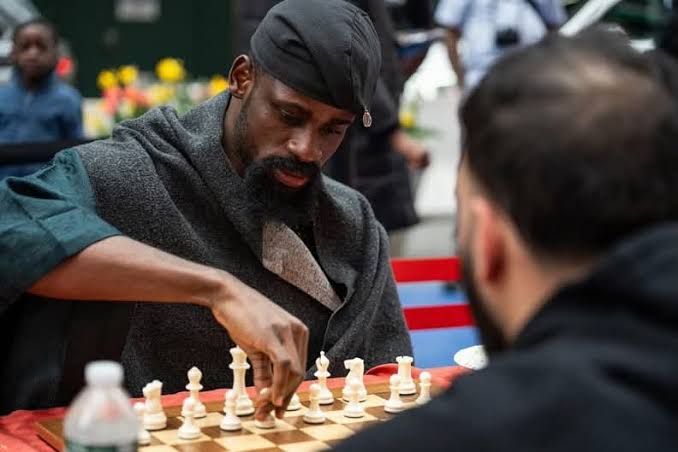

I want you to try something uncomfortable right now.
Close your eyes for five seconds and answer this question honestly:
If you stay on your current trajectory: the same job, the same routine, the same daily rhythm, for the next five years, where do you actually end up?
Not where you hope to end up, but where will your current trajectory will actually take you?
If that picture excites you, keep going. This post isn’t for you. But if that picture makes your stomach turn, even slightly, then something inside you already knows the truth:
You are on the wrong path.
The reason you haven’t changed your path might not really be because you don’t know what you are meant to do. But it’s because you think your calling doesn’t look glamorous, popular, or prestigious by society’s standards.
It doesn’t come with a corporate title. It doesn’t have a standardized salary band. It might not even seem “serious” to the people around you.
You call it a hobby. I am here to tell you it might be your life’s assignment.
In my previous post on why “find your purpose” is bad advice, I explained why purpose isn’t something you stumble upon, it’s something you build.
Today I want to go further. I want to show you where your purpose has been hiding while you were looking in the wrong places, what your spirit has been trying to tell you that you’ve been ignoring, and what happens when ordinary people stop dismissing what they do for free and start treating it as their true calling.
I am going to use two stories to reveal this. One belongs to a man who found his purpose in a barber’s shop. The other belongs to me.
Keep reading, there’s also free gift waiting for you inside this post 🎁
1. The Hobby Gateway: Your Purpose Is Already Talking to You
There is a woman I know, I will not name her, but you might recognise yourself in her story.
She is passionate about nutrition. Not casually interested, passionate. She knows exactly what to prescribe when you have a stomach ache, which herbs reduce inflammation, what combinations support gut health.
When you talk to her about food and healing, her eyes light up. Her voice changes. She becomes someone else entirely, more alive, more certain, more herself.
Guess what she does in her free time? She studies nutrition. She watches documentaries about herbal medicine. Her social media feed is nothing but health content, natural remedies, and food science. That is all she consumes.
But she has never gone back to school to get certified. She has never explored it as a career. She has never even considered that this “hobby” might be her life’s assignment.
Because in her mind, it is just something she enjoys. It is not serious. It does not look like a career. Nobody in her family did it. And so she files it under “interesting things I do in my spare time” and goes back to her day job — functional, employed, and quietly unfulfilled.
I meet people like her all the time, and every single time, I want to tell them: that thing you do for free, the thing you lose track of time doing, the thing you would do even if nobody ever paid you — that isn’t just a hobby. That is a signal.
Psychologist Mihaly Csikszentmihalyi spent decades studying what he called flow states — those moments when you are so absorbed in an activity that time disappears. You forget to eat. You forget to check your phone. Hours pass and it feels like minutes.
His research found something remarkable: flow occurs most frequently during activities people dismiss as hobbies, not during their paid work.
That is not a coincidence. That is your spirit telling you something your conscious mind has been overriding. Flow is the brain’s way of saying: this is what you were designed for. Pay attention.
When the nutrition woman loses herself in research about herbal remedies, she is in flow. When a young boy in the slums of Ikorodu found a chessboard in a barber’s shop and could not stop playing, he was in flow.
That boy’s name is Tunde Onakoya. And his story is the most powerful example I know of what happens when you stop dismissing what you call a “hobby”.
2. The Adjacent Possible: How a Barber’s Shop Led to Times Square
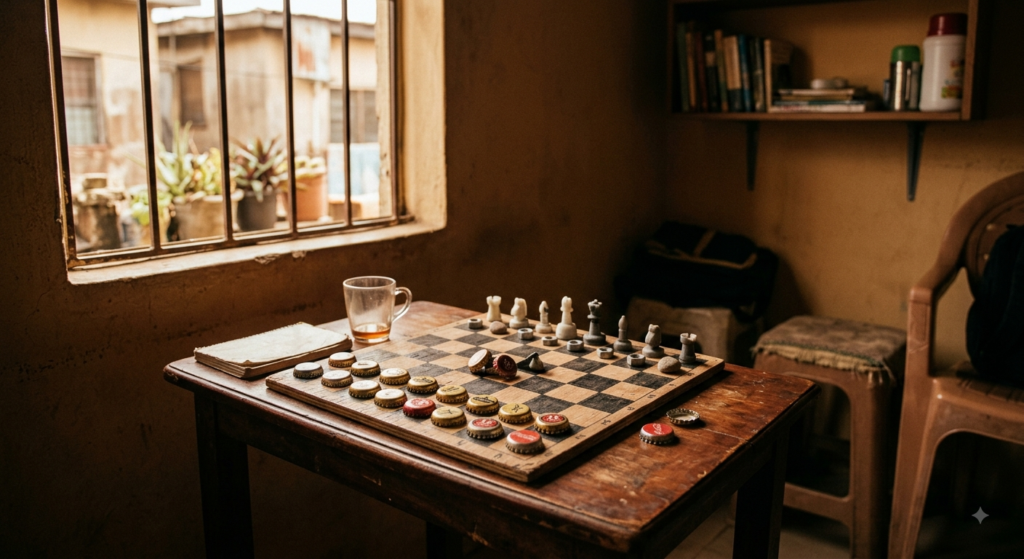
Tunde Onakoya was born in Ketu, Lagos, and raised in the slums of Ikorodu. His father was a danfo driver. His mother was a petty trader at Eko market. After primary six, he could not go to school for two years because his family simply could not afford it. He was introverted, could not speak English properly, and struggled deeply with self-esteem.
He discovered chess in a barber’s shop.
Not in a school. Not in a programme. Not through a mentor or a scholarship or a divine revelation. Just in a barber’s shop in Ikorodu.
Fascinated by the game, he started playing, practicing with bottle caps and makeshift boards. When he could scrape together some money, he watched YouTube tutorials at local cybercafés. Nobody paid him, and nobody told him it was his calling. It was simply the thing he couldn’t stop doing.
If you had looked at Tunde in those years — a broke, quiet boy practising chess with bottle caps — and told the people around him, “This boy will set a Guinness World Record in Times Square, New York, and transform the lives of hundreds of children”, they would have laughed.
Most people around him probably did. But here is what they did not understand and what I want you to grasp today:
In complexity science, there is a concept called the adjacent possible. It was introduced by biologist Stuart Kauffman to describe how complex systems evolve. The idea is simple but profound:
At any given moment, you can only access the doors that are directly next to where you are standing. You cannot leap from room 1 to room 50. You have to walk through room 2, which reveals room 3, which reveals room 4.
Purpose unfolds the exact same way.
Tunde couldn’t see Times Square from the barber’s shop. He could only see the chessboard. Mastering chess built a skill, which enabled him to win gold for Yabatech at the Nigeria Polytechnic Games.
That victory opened another door and sparked a question:
What if I could teach this to children who grew up like me?
That question birthed Chess in Slums Africa in 2018. The organization gained global recognition. Which eventually led to setting a world record at Times Square, New York
In April 2024, Tunde played a 60-hour chess marathon in the middle of Times Square, against National Master Shawn Martinez. He came back in April 2025 and played for 64 hours (stopping at 64 to mirror the number of squares on a chessboard).
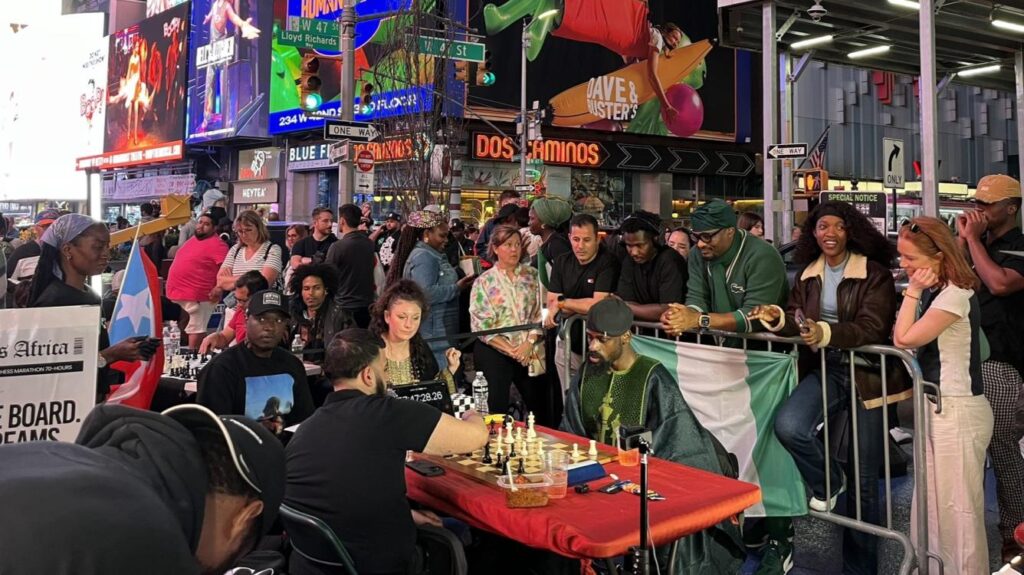
Guinness World Records officially certified the achievement raising over $110,000 for children’s education.
Today, Chess in Slums Africa has trained over 200 children and secured lifelong scholarships for dozens, including Ferdinand, a 10-year-old boy with cerebral palsy who won a chess tournament and met the Governor of Lagos State.
All of this started with a boy who could not afford school, practising with bottle caps in a barber’s shop, doing something everyone else dismissed as just a hobby.
Now let me ask you:
If you had met him in that barber’s shop and watched him play and someone told you,
“This chess thing would take him around the world, and save hundreds of children from poverty,” you might have dismissed it as an unserious dream.
Some people might have advised him to study to become a doctor, an engineer, or some other “more important calling”
The notion that says, “Is it [your hobby] that will feed you?” is the question that has buried more purpose than any other question in history. But as Tunde’s life proves, the answer is:
Yes. But only if you walk through the door with intentionality.
You do not need to see the Guinness World Record from the barber’s shop. You just need to see the chessboard.
Where Is Your Time Actually Going?
You just read about Tunde Onakoya and a woman who knows more about herbal medicine than most doctors, both hiding their purpose in plain sight. Now it is your turn to look honestly at your own life. I created a free Purpose Audit, a simple one-page worksheet with three columns that will reveal the gap between how you spend your time and where your purpose actually lives. It takes ten minutes. What it reveals could redirect the next ten years of your life.
3. The Path Audit: Why You Stay on Roads You Know Are Wrong

If your purpose has been signalling you through flow states, hobbies and burning desires that will not leave you alone, why are you still on the wrong path?
Behavioural economics has a name for this. It is called the sunk cost fallacy. It is the tendency to keep investing in something because of what you have already spent, not because of what it is actually returning.
“I have been in banking for eight years, I cannot start over now.” That is sunk cost.
“I already have a degree in this field, it would be a waste to switch.” Sunk cost.
“I have spent too long building this career to walk away.” Sunk cost.
Here is the uncomfortable truth:
The years you have already spent on the wrong path are gone regardless of what you do next.
They are not coming back whether you stay or leave. The only question that matters is:
What is the return on your NEXT year?
If staying on your current path brings you no closer to the life you actually want, then staying is not protecting your investment. It is adding to your loss.
Let me make this personal, for instance:
Are you someone deeply passionate about tech?
Your social media feed is all tech-related. You have gone through courses on Python, JavaScript, UI design.
You light up when you see new gadgets. You can explain blockchain to a five-year-old.
Yet you call yourself a “tech enthusiast” not an engineer, not a developer, not a founder, and you are sitting behind a receptionist desk somewhere in an organisation that has nothing to do with technology.
You are on the wrong path.
The excuses may sound reasonable:
“I am too old to go back to school.”
“I do not have the money.”
“What if I try and fail?”
“I have responsibilities.”
But hear me clearly: next year, you will be one year older regardless.
The question is whether you will be one year closer to your dream OR one year older and still sitting at that desk, wondering what would have happened if you had pursued your passion intentionally.
Tunde Onakoya could not afford school. He practised chess with bottle caps. He did not have money, connections, or a clear path. What he had was a hobby he refused to dismiss, and the courage to walk through the next door even when he could not see what was behind it.
If he had listened to the voice that says “Be realistic,” there would be no Chess in Slums. No Times Square. No Guinness record. No scholarships for children who would otherwise have had nothing. The “realistic” path would have kept him at a regular job quietly unfulfilled.
So I am asking you today: audit the path you are on right now.
Not the path you tell people you are on. Not the path that looks good on paper. The path your feet are actually walking.
Is your current path actually leading to the life you want? Or is it the path society mapped out for you, the one your family expected, the one that felt safe?
Because safe and stuck look exactly the same from the outside.
4. From Hobby to Calling: Your Purpose Can Evolve

There’s something most people never consider about purpose, a principle I do not think enough people talk about: purpose can evolve.
The door you walk through today may lead to a room you did not expect and that room may reveal a purpose bigger than the one you started with.
When I was sitting at that desk in the oil industry, my purpose was to teach people how to make healthy, nutritious meals. Cooking. Creating. Showcasing Nigerian cuisine to the world. That was the burning desire I could not switch off. So I walked through that door and built Zeelicious Foods.
But here is what I did not expect: the dexterity, strength of character, discipline, and skills I developed building Zeelicious Foods did not just make me a better cook. They made me a better builder. They revealed a new vision — one I could never have seen from the oil company desk.
I went from feeding people nutritious food to feeding people’s destinies with life-giving insights, strategies, and skills to help them become the very best version of themselves. Zeelicious Foods was not the final destination. It was the door that led to Winnie’s School of Excellence(WSE).
If I had waited until I could see WSE from the oil company, I would still be waiting. But I did not need to see WSE. I just needed to see Zeelicious. And Zeelicious showed me everything else.
This is why I am so passionate about telling you: start with what is in your hands.
The hobby. The burning desire. The thing you already do for free. Do not wait until the full picture is clear. The full picture only becomes clear after you start moving.
Because clarity comes with momentum
In entrepreneurship research, Professor Saras Sarasvathy studied how top founders actually build businesses. She found that the most successful ones do not start with a grand vision, or a rigid master plan. They don’t always have the full picture or blueprint while starting out.
They use a process called effectuation. They ask three simple questions:
Who am I?
What do I know?
Who do I know?
Then, they start building forward with whatever is already in their hands
Purpose works the same way. You do not need a perfect five-year plan to start. You just need to start building with what you have. The vision becomes clearer through the building.
Name the Signal. Change the Direction.
My journey from the oil industry to Zeelicious Foods started with a burning desire I could not ignore. Yours might be hiding in the thing you already do for free, the thing you would pursue if you did not have to worry about bills. Download the free Purpose Audit and find out. Three columns. Ten minutes. One revelation that could change everything.
5. Play to Win: Equip Yourself for the Life You Say You Want
Now, let me speak directly to those who have identified that internal spark and stopped calling it “just a hobby”. You have walked through the first door. But now you are standing in the next room and asking: “How do I actually make this work?”
Here is where most people fall apart. They identify the calling but never equip themselves for it. They say they want to build something extraordinary, but put in the kind of effort that guarantees ordinary results.
To fulfil your purpose, you need to arm yourself with mastery. And your weapons are the skills you need to master to excel in the space you are entering.
What are you doing right now to equip yourself for the life you say you want?
Are you putting in the bare minimum? Watching one tutorial a month, reading the occasional article, “planning to start”? Or are you launching an onslaught?
Are you studying the best in your field, the way Tunde studied chess masterclasses? The way I studied culinary experts when I was building Zeelicious Foods?
Are you consuming content that feeds your vision or content that distracts you from it?
Because here is the truth: your hobby becomes your calling when you treat it with the seriousness of a profession.
Not when someone approves of you. Not when you get a title. Not when you get paid for it. It becomes your calling when you decide to master it.
Tunde did not become a chess master because someone certified him as one. He became a chess master because he practised with bottle caps when he could not afford a board, watched tutorials in cyber cafés when he could not afford a coach, and competed in every tournament he could enter until his skill was undeniable. He armed himself.
The nutrition woman I told you about earlier? The one who knows exactly what to prescribe but never got certified? She has the knowledge. She has the passion. She has the flow.
What she has not done is arm herself: get the credentials, build the portfolio, put herself in rooms where her expertise is tested and sharpened. And until she does, her passion may remain a hobby. Not because it is a hobby, but because she is treating it like one.
So here is my challenge to you: play to win. Not to participate. Not to “see how it goes.” Win!
If you want to transition from a casual interest to a true calling, you must play to win. Research what you need to master, rearrange your schedule, invest your resources, and sacrifice temporary comfort to build real competence.
Not forever but for this season. Because the distance between a hobby and a calling is not talent. It is not luck. It is not opportunity. The distance between a hobby and a calling is how seriously you choose to equip yourself.
Your Purpose Is Revealed Now What?
Today you have learned three things.
- Your purpose is not missing. It is disguised as the thing you already do for free: the hobby, the burning desire to learn more about something, to help people, the activity that puts you in flow. Stop ignoring the signal.
- You do not need the full picture to start. Purpose reveals itself one adjacent door at a time. Tunde did not see Times Square from the barber’s shop. I did not see WSE from the oil company. You will not see your final destination from where you are standing. But you can see the next door. Walk through it.
- The reason you have stayed on the wrong path is not fear, it is “sunk cost”. The years are gone regardless. The only question is what is the return on your next year if you choose to do something different
If you’ve been praying, if you’ve been asking God for years to reveal your purpose. If you’ve been waiting for a dream, an open vision, an audible voice, a prophetic word from someone who “carries the anointing.” And because it has not come in the packaging you expected, you have concluded that God has not answered.
He has...
He has been answering you through the lack of peace you feel at your current job, that restlessness is not ingratitude, it is redirection.
He has been answering you through the burning desire you cannot switch off, the burning curiosity you cannot satisfy, that desire is not distraction, it is assignment.
He has been answering you through the thing you keep coming back to, the thing you study for free, the thing that makes you come alive when everything else makes you feel like you are merely surviving.
That is the answer. You have just been looking for a thunderous voice when God has been speaking in a nudge.
And I know what you might be thinking:
“But what if I step out and I miss it? What if I follow this thing and it turns out to be the wrong path?”
Let me settle this for you:
Even if you “miss it”, even if the first door you walk through is not the final destination, what you build and learn and become through that door will lead you to the next one.
That is how discovering your purpose unveils itself. That is how I discovered Winnie’s School of Excellence from Zeelicious Foods. That is how Tunde’s chessboard at a barber’s shop led to Times Square.
You cannot miss your purpose by moving toward it. You can only miss it by standing still.
As a Christian, you have a promise that most people never activate. The Scripture says, that the Holy Spirit “will guide you into all truth” (John 16:13). All truth. That includes the truth of His plan and calling for your life.
He did not say “some truth” or “truth about theology only.” He said all truth, including the truth about your purpose, what you are meant to build, where you are meant to go, and who you are meant to become.
So stop allowing the “fear of missing it” to keep you from following the prompting in your spirit. Trust that He is leading you as He promised.
And even if you stumble, even if you take a detour, He is faithful enough to reroute you because a God who numbers the hairs on your head is certainly invested enough in your life to course-correct you when you are sincerely trying to follow Him.
The question was never “Will God show me my purpose?” He already has.
The question is: “Am I willing to walk through the door He has been pointing to?”
Knowing your purpose and building a strategic plan around it are two different things. Recognising the signal is step one. Step two is mapping it: turning that burning desire into a concrete, time-bound, actionable vision for your life.
That is exactly what we are covering in the next post. I am going to show you how to take the purpose you have identified and reverse-engineer it into a plan not a vague dream, but a blueprint with stages, milestones, and deadlines.
Because a purpose without a plan is just a beautiful feeling that may never become a fulfilling and impactful life.
GO DEEPER: VISION AND PURPOSE MASTERY
If you are ready to discover your purpose and create a vision for your life, my Vision and Purpose Mastery Replay is 5 hour webinar where I showed over 400 attendees how to uncover their purpose and build a vision for their lives. The testimonies from this webinar have been mindblowing and deeply transformational.
The insights I shared in this webinar helped people gain clarity for their lives and achieve their remarkable dreams. Get access to the webinar replay here, and get ready to move from “I think I know what I want” to “I have a clear, actionable vision for my life.”
Over 400 people have been transformed through this programme. The next one could be you.
Key Takeaways
- Your purpose is not missing, it is disguised as the thing you already do for free and lose track of time doing.
- Flow states are your nervous system’s signal that you are operating in your design. Stop ignoring them.
- Purpose reveals itself through the adjacent possible, one door at a time. You do not need the full picture to start.
- The sunk cost fallacy keeps people on wrong paths. The years are gone regardless, the only question is what return will your next year give you.
- Start with what is in your hands: who you are, what you know, who you know. Build forward from that, not backward from a perfect plan.
- Your hobby becomes your calling when you treat it with the seriousness of a profession, equip yourself, arm yourself, play to win.
- Purpose can evolve. The first door may reveal a bigger one. Zeelicious revealed WSE. Chess in the barber’s shop revealed Times Square.
- Next year you will be one year older regardless. The question is whether you will be one year closer to your dream or one year deeper into the wrong path.
FAQ
How do I know if my hobby is actually my purpose?
Look for flow states, those moments when you lose track of time because you are so absorbed. Research shows flow occurs most frequently in activities people dismiss as hobbies. If you consistently experience flow doing something, your nervous system is telling you this is what you were designed for. The other signals: you study it voluntarily, you think about it when nobody asks you to, and you would do it even if nobody ever paid you.
What if my purpose does not seem “serious enough” to be a career?
Tunde Onakoya found purpose in chess — in a barber’s shop in the slums of Lagos. It did not look serious. It did not look like a career. It looked like a hobby for a broke boy with no prospects. Today it has trained 200+ children, secured scholarships, broken world records, and reached three continents. The “seriousness” of your calling is not determined by how it looks at the beginning. It is determined by how seriously you treat it.
I have invested years in my current career. Is it too late to switch?
Behavioural economists call this the sunk cost fallacy — the tendency to keep investing in something because of what you have already spent, not because of what it is returning. The years are gone whether you stay or go. The only question that matters is: what does the next year return? If the next year on this path brings you no closer to purpose, staying is not protecting your investment — it is adding to the loss.
What is the “adjacent possible” and how does it apply to finding purpose?
The adjacent possible is a concept from complexity science: at any given moment, you can only access the doors directly next to where you stand. You cannot leap to room 50 from room 1. Purpose works the same way — it reveals itself one step at a time. You do not need the full picture. You need the next door. And the next door is usually the thing you are already doing for free.
References
Brockman, J. (2003, September 11). The adjacent possible: A talk with Stuart A. Kauffman. Edge. https://www.edge.org/conversation/stuart_a_kauffman-the-adjacent-possible
Chess in Slums Africa. (2025, April 21). Tunde Onakoya breaks the world record for the longest chess marathon. https://chessinslumsafrica.com/2025/04/21/tunde-onakoya-breaks-the-world-record-for-the-longest-chess-marathon/
Csikszentmihalyi, M. (1990). Flow: The psychology of optimal experience. Harper & Row. https://www.harpercollins.com/products/flow-mihaly-csikszentmihalyi
Csikszentmihalyi, M. (2004, February). Flow, the secret to happiness [Video]. TED Conferences. https://www.ted.com/talks/mihaly_csikszentmihalyi_flow_the_secret_to_happiness
Guinness World Records. (2025). Longest chess marathon. https://www.guinnessworldrecords.com/world-records/longest-chess-marathon
Kauffman, S. A. (1995). At home in the universe: The search for the laws of self-organization and complexity. Oxford University Press. https://global.oup.com/academic/product/at-home-in-the-universe-9780195111309
Sarasvathy, S. D. (2008). Effectuation: Elements of entrepreneurial expertise. Edward Elgar Publishing. https://effectuation.org
Sarasvathy, S. D. (2001). Causation and effectuation: Toward a theoretical shift from economic inevitability to entrepreneurial contingency. Academy of Management Review, 26(2), 243–263. https://www.darden.virginia.edu/effectuation
Thaler, R. H. (2015). Misbehaving: The making of behavioral economics. W. W. Norton & Company. https://wwnorton.com/books/Misbehaving/
Recent Posts
-

Service: The Part of Leadership Nobody Wants to Talk About (and 7 Lessons It Teaches You!)
October 16, 2026 -
Self-Mastery: The First Attribute of Every Great Leader (and 10 Steps to Build It)
October 9, 2026 -

How to Create an Offer That Sells: Pricing, Packaging and Positioning Made Simple
October 2, 2026 -

How to Make Your Annual Income in a Month: The Wealth Mastery Skill Nobody Taught You
September 25, 2026 -

The Art of Effective Communication: 5 Communication Shifts That Will Transform How People Respond to You, Your Brand, and Your Value.
September 18, 2026