
 Winifred Nwania
Imagine you’re sitting in traffic. The weather is hot and humid, your throat is dry, and you just so happen to see a vendor along the roadside selling bottled water. You quickly beckon to the vendor who rushes to your car to bring you a bottle. You buy one, break the seal open and drink and it costs you 5 bucks, almost nothing.

Now picture the same afternoon in the lobby of a five-star hotel. A waiter in a crisp uniform places a chilled glass on your table with a slice of lemon on the side. You pay $1000, many times more than what you paid in traffic, and you do not even blink.
What changed? I mean water is water right? The thirst was the same, and so was your body’s need. So what changed?
What changed was not the product. What changed was the offer: who it was for, how it was packaged, where it was positioned and how it was priced.
And this is exactly what is happening with your skill.

You can braid hair, balance a spreadsheet, plan an event, coach a child through maths, write a proposal, style a wardrobe or calm a room full of angry people.
Your friends call you when they need it. Your colleagues say “you are so good at this.” But when it is time to make money from it, you keep underpricing your value, one small transaction at a time, and wondering why you are so tired and broke.
There is absolutely nothing wrong with you. You do not have a talent problem. You have an offer problem.
In my last post, How to Make Your Annual Income in a Month, I showed you that wealth is a number and I walked you through the 7-Step Wealth Mastery Blueprint. Step 4 was to create an offer.
So today we’re diving into a crash course on how to create a compelling offer that people feel stupid for saying no.
Are you ready?
Grab your notebook and let’s begin.
What Is an Offer, Really?
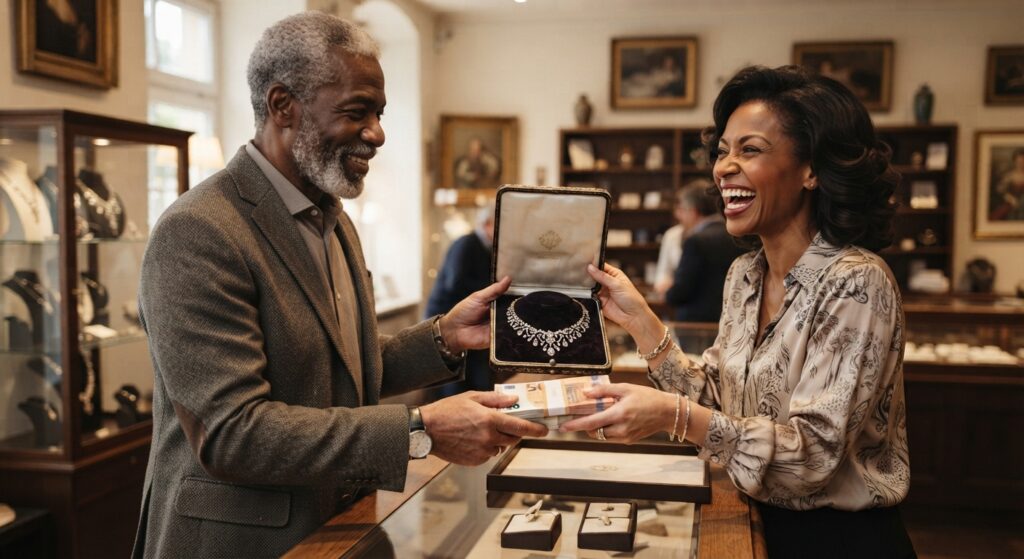
An offer is not your skill, product or service. It is not your CV, your certificate or your years of experience. An offer is a clear promise of a specific result, for a specific person, delivered in a specific way, at a specific price.
The late Harvard marketing professor Theodore Levitt is widely quoted for putting it this way:
“People do not want a quarter-inch drill, they want a quarter-inch hole.”
Nobody wakes up wanting “a consultation.” They wake up wanting clarity. Nobody wants “a stylist.” They want to walk into a room and be taken seriously before they say a word.
So when you describe what you do in terms of the drill (your process, your tools, your hours), you are asking the buyer to do the hard work of imagining the hole. Most people will not. They will scroll past, and it will have nothing to do with how good you are.
When an offer is put together well, something shifts in the buyer’s mind. They stop asking “who is cheapest?” and start asking “how do I get in?” Alex Hormozi, author of $100M Offers, explains “why” with a simple idea he calls the Value Equation.
The value of your offer goes up when you increase two things:
- The dream outcome: how big and desirable the result is to the buyer.
- The perceived likelihood of achievement: how much they believe it will actually work for them.
And it goes up when you decrease two things:
- The time delay: how long they have to wait to see the result.
- The effort and sacrifice: how much work, stress and inconvenience it costs them.
Let’s go back to our hotel water example. The dream outcome is not just “no longer thirsty.” It is refreshment, comfort and a little bit of status. The likelihood is high because the seal is unbroken and the “5-star” status is trusted to give the perception of prestige. The time delay is zero, and so is the effort because someone brought it to your table.
That is why you paid more without complaining. But for all you know it could have come from an untreated tap water somewhere in the bathroom! Just kidding, let’s believe they wouldn’t do that!
Let that sit with you. People do not pay for effort. They pay for results with less effort. The more of the burden you carry for them, the more your offer is worth.
If you would like to learn more about how to build an offer that people would feel stupid for saying no, get your own copy of $100M Offers: How to Make Offers So Good People Feel Stupid Saying No by Alex Hormozi.
It is practical, it is direct, and it will change the way you look at everything you sell. Read it with a pen in your hand and this post open beside you.
The 5-Step Offer Formula
Here is the framework I want you to work through to craft compelling offers for your skills, service or business.
I call it the 5-Step Offer Formula, and each step is one question you must answer honestly.

Step 1: Person. Who Exactly Is This For?
The biggest mistake I see most people make is trying to sell to everybody. “My service is for anyone who wants to grow.” Anyone is no one. When you speak to everyone, nobody feels spoken to.
Pick one person. Not a demographic on a spreadsheet, a real person you can picture:
How old are they?
What do they do on a Tuesday morning?
What are they tired of?
What have they already tried that did not work?
What are they secretly afraid of?
If you have already helped people for free (and most of you have), look at the ones who got the best results and were the happiest to receive your help. That is usually your person.
Here is something many talented people get backwards. They spend months polishing the offer and almost no time asking whether the people they are offering it to are hungry for it. A brilliant offer to the wrong crowd will struggle, and a simple offer to a hungry crowd will sell. So before you go any further, test your ideal customer with three honest questions:
- Do they need it? Not “it would be nice to have,” but “I need this fixed ASAP.” Because the truth is people do not pay to solve problems they are managing comfortably.
- Can they pay? Pain without purchasing power is a ministry, not a business. Both are beautiful, but position your offer to target the category of people who can actually pay for your product or service, unless you’re doing charity.
- Can you reach them? Are they gathered somewhere you can find them: a WhatsApp group, a professional association, a church, an office, a LinkedIn niche, an alumni network?
If your answer to all three is yes, you have found your ideal customer.
What this means for you: write one paragraph describing your person so clearly that when you craft your offer, they can easily picture themselves benefitting from your solution.
Step 2: Problem. What Keeps Them Up at Night?
Once you know your person, you name their problem in their own words, not yours. For instance, if your offer involves improving a person’s brand, you might call it “brand positioning.” But your customers call it
“I post every day and nobody buys.”

If you help people improve their finances, you might call your offer “financial literacy.” But your customers call it
“Salary comes in and by the 15th it has disappeared.”
People buy the solution to the problem they already know they have. Your job is not to convince them they have a problem. It is to describe their problem so accurately that they trust you with the solution.
The easiest way to do this? Listen. Read the comments under posts in your field. Pay attention to the questions people ask you in DMs and at events or family gatherings. Write down the exact phrases they use. Those phrases become your headlines, your sales page and your pitch.
Then go one step further and write down every “but” that people tell themselves about your potential offer. For example:
“It sounds good, but I do not have time.”
“But I have tried something like this before and it did not work.”
“But what happens after the session ends?”
“But my husband (or wife, or boss) will not understand.”
Every “but” is a reason your target customer might not buy. It is also a clue. Each one is telling you exactly what your offer needs to include, and when your offer has an answer for almost every “but”, getting a yes becomes easy.
Free printable canvas
Your Offer Is Already in Your House. Let Us Get It on Paper.
You have just named your person and their problem. Do not let it stay in your head. The free Offer Builder Canvas walks you through all six parts of your offer, one box at a time. Type straight into it or print it out, so by the end of this post you will have your first offer drafted, not just understood.
Step 3: Promise. What Result Will They Walk Away With?
Now turn the problem into a promise. A good promise is specific, believable and measurable. Compare these two:
“I help people communicate better.”
“In 4 weeks, you will be able to lead a meeting, pitch an idea and handle a difficult conversation without your voice shaking.”

The first one describes the solution in a vague way. The second one describes the transformation that this offer will achieve for the buyer and it even adds a timeframe so they can picture it.
One caution here, and I say it with love:
Never promise what you cannot deliver.
Your promise must be something you can stand behind with your name. Integrity is not a marketing tactic, it is the foundation. A modest promise you keep will build your reputation faster than a big promise you break.
Step 4: Package. What Shape Does Your Offer Take?
Packaging answers the practical questions every buyer is silently asking:
What do I get?
How is it delivered?
How long does it take?
What happens after I pay?
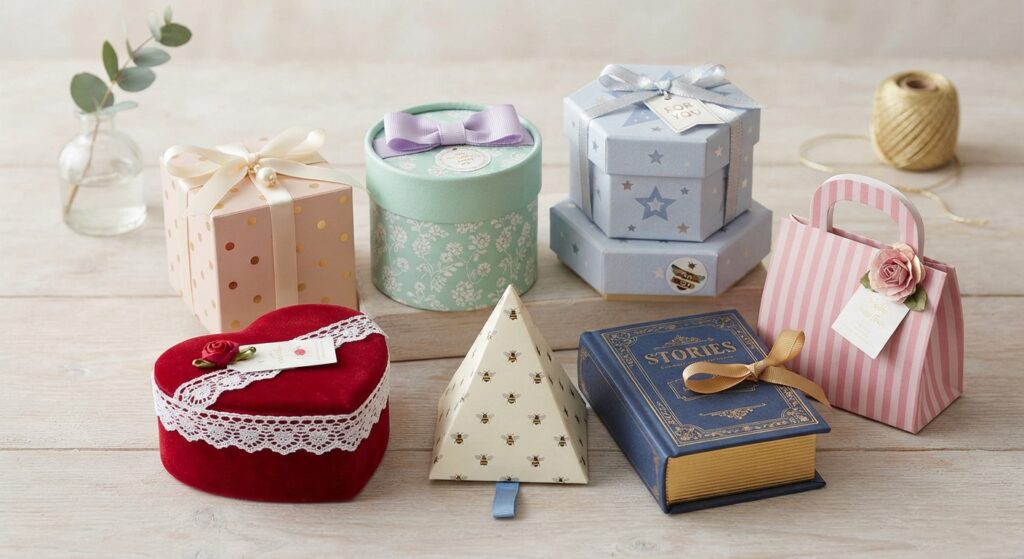
Your package might be a one-time session, a 6-week programme, a done-for-you service, a digital product, a workshop, a template or a membership. What matters is that it has clear endpoints: A beginning, an end, and a list of what is included.
Here are 4 packaging principles to keep in mind when creating your offer.
- Remove effort.
Go back to the Value Equation by Alex Hormozi. Every bit of effort you remove from your buyer increases what your offer is worth:
Templates, checklists, recordings, reminders, a WhatsApp check-in, a done-for-you option. Ask yourself:
“What is the hardest part of this for my client, and how can I support them better to execute it?”
- Do not overwhelm them with choices.
Research shows that people tend to buy more when they’re less burdened with too many options. According to the study, when 24 flavours of a brand were displayed, more people stopped to look, but only about 3% of them bought. When only 6 flavours were displayed, about 30% bought.
When the options are hard to compare and the buyer is not sure what they want, a confused buyer does not buy.
So start with one core offer, and make it excellent.
- Add, do not subtract.
When a buyer hesitates, most of us panic and cut the price. Please do not.
Researchers ran a fascinating experiment in 2005. Students were given an energy drink that claimed to sharpen the mind, and then asked to solve word puzzles. Some were told they were paying the regular price.
Others were told they were getting it at a discount. It was the same drink, but the students who got it at a discount solved noticeably fewer puzzles. The discount did not only change what they paid. It changed what they expected, and what they expected changed what they got.
So instead of taking money off, go back to your list of “buts” and add a bonus that answers more of the customer’s objections: a checklist, a recorded walkthrough, a template, a follow-up call. A discount says “this is worth less.” A bonus says “you are getting even more.”
- Carry the risk for them.
According to research, people feel loss twice as much as they feel gain. Your buyer is not only thinking “what will I gain?”
They are also thinking “what if I pay and it does not work for me?”
That second question is louder especially since your offer price is already perceived to be on the high side. To silence this fear, add to your offer, a clear promise of what you will do if they are not satisfied.
It could be: a revision, an extra session, continued support until they get the result, or a refund. Whatever you choose, it must be something you will honour every single time.
A guarantee you would not keep is simply a lie and that will destroy your integrity and cripple your potential for future sales.
Step 5: Position and Price. Why You, and How Much?
I have put positioning and pricing together because they cannot be separated. Your positioning determines what price the market will accept.
Remember the water example? The same water costs more in the hotel lobby because of where it was positioned and who it was positioned for.
Your positioning answers the question: Why you? And Why now?

Positioning is how your offer is understood in the mind of your buyer compared to their other options. April Dunford, author of Obviously Awesome, makes the point that customers always compare you to something, even if that something is “doing nothing” or “figuring it out on YouTube.”
So you have to answer the question before they ask it:
Why should I choose this over everything else I could do?
Strong positioning usually comes from one of these:
- A specific audience. When your offer is niched down to a specific audience, it strengthens your positioning for instance:
“Financial coaching course for first-time managers” is more powerful than just “financial coaching.”
- A unique approach. Your offer shouldn’t be something you scraped off the web and can be found everywhere else, add your own twist to it using: Your unique method, your framework, or your own story.
- Proof. If you have results you have already delivered, even if they were for free, include it in your offer. This will strengthen your positioning and credibility in the space. So get real, not fake, testimonials from the people you have already helped.
This is where your personal brand does the heavy lifting.
As I shared in What Is Your Personal Brand Telling People About You? A diamond isn’t as rare as we were made to believe and almost everyone knows that today but people still choose diamonds over other stones for their engagement rings because of one thing only: perception.
Use the power of perception as your strategy in strengthening your personal brand and offers. If you want to build your visibility intentionally, the Art of Personal Branding course will walk you through it.
Pricing: Price the Transformation, Not the Time
Here is how most people fall for the pricing trap: you calculate your price by counting your hours. “It took me two hours, so I will charge for two hours.”
But your client is not paying for your two hours. They are paying for the ten years it took you to be able to do it in two hours, and for the result they will enjoy long after you are gone. Price the transformation, not the time.
There is another trap that people fall into when it comes to pricing their value:
They try to be the cheapest!
Many of us were raised to believe that charging less is the humble, godly thing to do. But look at what the research says about how price shapes experience.
A 2008 study published in the Journal of the American Medical Association, reported that more people reported less pain when given a perceived “expensive” placebo pill (a pill with no medicine in it at all). Of those who got the “expensive” pill, 85% reported less pain. Of those who got the “cheap” pill, 61% did.
Same pill. No medicine. A different price, and a different result in the body. Let that sit with you because that is how the human mind works.
When you underprice your work, you are not only earning less. You may be lowering how seriously your client takes it, how committed they are, and how much they get out of it. And when you charge well, you have more to put back into their experience, so they get better results and your reputation grows.
Here are 4 pricing principles to make your offer Irrestible
1. Offer options, not a single yes-or-no.
When there is only one price, the buyer’s question becomes
“Should I buy or not?”
When there are well-designed options, the question becomes
“Which one is right for me?”
Research shows that people judge the value of what you offer differently when you have tiered offers compared to just a single offer.
Your offer can have a simple three-tier structure too, for example: a self-guided version, a guided version and a premium done-with-you version
Figure out how to apply this to your offers
2. Do not apologise for your price.
If you do not believe your offer is worth it, your buyer will hear that doubt in your voice. State your price, then stop talking.
3. Test before you perfect.
You do not need a website, a logo and a sales funnel to start. Describe your offer to five people who fit Step 1 and ask them to pay. Their response is data. If they say yes, you have an offer. If they hesitate, ask why, adjust, and try again. Your offer will become better as you show it to more people and get their responses.
4. Use deadlines and limits only when they are true.
Real limits help people decide for instance:
A cohort with a fixed number of seats because you can only give that many people proper attention.
A price that genuinely goes up on a set date, a bonus only for early buyers.
But they must be real. If you say “only 5 spots left” when there are 50, you might win a sale, but you will lose your reputation. Your word is part of your offer.
Before you set your price
Stop Undercharging for What Took You Years to Learn.
Pricing is where most good offers die, not because they are bad, but because nobody wrote them down properly. The Offer Builder Canvas gives you room to work through your person, problem, promise, package, positioning and three price tiers, then name the five people you will tell this week. Fill it in on your phone or computer, or print it and write by hand.
Your Skill Is the Oil. Your Offer Is the Vessel.

There is a story in 2 Kings 4 that illustrates this topic perfectly.
A widow comes to the prophet Elisha in distress. Her husband has died, he left debts behind, and the creditor is coming to take her two sons as slaves.
Elisha does not start by praying for money to fall from the sky. He asks her a question:
“What shall I do for you? Tell me, what do you have in the house?”
And she says, “Your maidservant has nothing in the house but a jar of oil” (2 Kings 4:2, NKJV).
Nothing but. How many of us talk about our gifts that way? “I have nothing, just this small thing I do.”
Then Elisha tells her to borrow empty vessels, pour the oil into them, and when they are full, he gives her the instruction that changed her family’s future:
“Go, sell the oil and pay your debt; and you and your sons live on the rest” (2 Kings 4:7, NKJV).
Notice what happened. The miracle multiplied the oil, but the oil still had to be poured into vessels and sold. The provision came through an offer. She had to take what was in her house, put it into a form other people could carry away, and exchange it for money.
Your skill is the oil. Your offer is the vessel. And a lot of people are praying for more oil when the blessing is in the “pouring” into the vessels.
Now Make the Offer.
An offer that is never made does not exist.
You can work through all five steps, design the most beautiful package and set the perfect price, and still earn nothing if you do not tell people about it. The widow did not sell oil by sitting in her house admiring the full vessels. She went out and sold it.
So tell people. Post about it. Send the message. Mention it at the end of the free help you are already giving. Say, “I have a programme for exactly this, would you like to hear about it?”
Some people will say no, and that is fine. Every “no” teaches you something, and every “yes” pays for a lesson you could not have learned any other way.
And when you speak about your offer, speak like you believe it.
The way you communicate your offer is part of the offer.
If you freeze when it is time to say the price, or ramble when someone asks “what exactly do you do?”, we have a course called the Art of Effective Speaking & Communication that will help you build the confidence and skill to articulate your value with clarity and confidence. Explore the course here
You Do Not Have to Build This Alone
I know how lonely it can feel to build something from scratch. You second-guess your price at midnight, you wonder whether anyone will buy, and you look at people who seem to have it all figured out and wonder what they know that you do not.
You do not have to figure it out by yourself. Inside the Excellence Elite community, you will be surrounded by people who are building, launching and growing just like you, sharing what works and cheering each other on.
And if you want me to look at your skills, and your goals with you, and help you shape your first (or next) offer, book a Vision-to-Reality 1-on-1 Consultation. We will sit with what you have in your hands and show you how to create the right offer for your value.
Go Deeper
If this post has shown you that your offer needs a stronger foundation, here is where to go next:
- Art of Personal Branding: to position yourself so the right people see your value before you say a word.
- Art of Effective Speaking & Communication: to pitch, present and state your price with confidence.
- Graceful Communication Mastery Kit: to sharpen how you speak about what you do in everyday conversations.
- $100M Offers by Alex Hormozi: if you want to go deeper on the Value Equation and on building offers people feel stupid for saying no to
Coming Next
You now have an offer. But an offer on paper is still a seed in your hand. In my next post, we are stepping into the 4th M of the WSE framework: Manifestation, and I am going to show you how to take what you have built and bring it into the world, so that the people you are called to serve actually find it, trust it and say yes.
I will see you in my next post!❤️
Key Takeaways
- You do not have a talent problem. If your skill is not making money, you most likely have an offer problem.
- An offer is a clear promise of a specific result, for a specific person, delivered in a specific way, at a specific price.
- People do not buy the drill, they buy the hole. Describe the result, not your process.
- Value goes up when you increase the dream outcome and the buyer’s belief, and when you reduce the time delay and the effort for them.
- The 5-Step Offer Formula: Person, Problem, Promise, Package, Position and Price.
- Choose a hungry crowd: people who feel the problem, can pay to fix it and are easy for you to reach.
- Answer every “but” inside your offer. Add a bonus instead of cutting your price, and carry the buyer’s risk with a promise you will honour.
- Price the transformation, not the time. Price shapes how people experience what they buy, so cheap is not humble. Do not apologise for your price, and only use deadlines and limits that are real.
- An offer that is never made does not exist. Go and sell the skill in your hands.
Frequently Asked Questions
I do not think my skill is special enough to sell. Where do I start?
Start with what people already ask you for. If friends, family or colleagues keep coming back to you for the same thing, that is evidence of value. It does not have to be rare to be valuable. It has to solve a problem someone is willing to pay to make disappear. Remember the widow’s “nothing but a jar of oil.” That jar was enough.
How do I know if my price is too high?
If nobody says yes after you have described your offer clearly to the right people, look first at your person, problem and promise before you drop your price. Very often the issue is not the number, it is that the buyer cannot yet see the value. If everyone says yes immediately without any hesitation, your price may be too low.
Should I offer my service for free first to build experience?
Free work can be useful for a short, intentional season, to get testimonials and refine your process. But set a limit (for example, your first three clients) and ask for a testimonial in return. Free forever is not generosity, it is a hobby.
What if someone else is already selling the same thing?
That is good news. It means there is a market. You are not competing on the skill alone, you are competing on the offer. A different audience, a clearer promise, a better package or a stronger story can set you apart even in a crowded space.
Should I give a discount to close the sale?
Try a bonus first. A discount lowers the value of what you sell, and it trains people to wait for the next price drop. A bonus that solves one more of their obstacles (an extra check-in, a template, a recording) makes the offer feel richer and protects your price.
Can I have more than one offer?
Yes, eventually. But start with one core offer and make it excellent. Once it is selling consistently, you can add a lower-priced entry point and a premium option around it. Build the house before you add the extensions.
References
The Holy Bible, New King James Version: 2 Kings 4:1-7; Proverbs 22:29; Proverbs 31:18.
Dunford, A. (2019). Obviously Awesome: How to Nail Product Positioning So Customers Get It, Buy It, Love It. Ambient Press.
Kahneman, D. (2011). Thinking, Fast and Slow. Farrar, Straus and Giroux.
Recent Posts
-

How to Create an Offer That Sells: Pricing, Packaging and Positioning Made Simple
October 2, 2026 -

How to Make Your Annual Income in a Month: The Wealth Mastery Skill Nobody Taught You
September 25, 2026 -

The Art of Effective Communication: 5 Communication Shifts That Will Transform How People Respond to You, Your Brand, and Your Value.
September 18, 2026 -

What Is Your Personal Brand Telling People About You?
September 11, 2026 -

Your Growth is Not Optional: Why Skill Development is Your Best Offensive Weapon
September 4, 2026