
 Winifred Nwania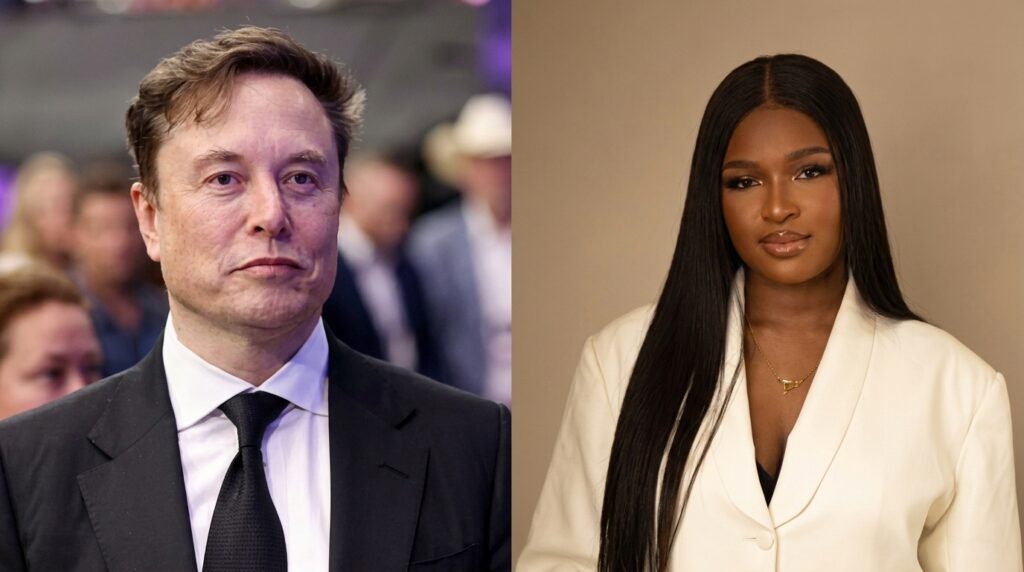
I’m about to say something that will change how you see the world. Are you ready? Here goes:
Diamonds are not rare.
There I said it!
The truth is, they never were. So why were they considered rare in the first place?
It’s because a handful of powerful players simply bought up the mines, choked the supply, and manufactured a brilliant illusion of scarcity. The earth actually produces millions of carats of diamonds every single year, and has been doing so for billions of years. There are enough diamonds in existence right now to give every person on the planet a handful.
And yet, if I offered you a diamond ring today, something inside you would immediately assign it a value far beyond its material worth. You would call it precious. You would call it priceless. You would treat it like it was one of a kind.
Why? Because for over a century, the perception of diamonds has been so carefully, so consistently, so intentionally constructed that your brain cannot separate the stone from the story. And your brain, regardless of the facts, believes the story.
That is what perception does. It overrides reality.
And you can use this concept to build an authentic personal brand…
The true value of a thing is not in the thing itself. It is in the perception. And the question you need to ask yourself, before you ever step in front of a camera, before you write a single post, before you introduce yourself in any room, is not
“What should I say?” “What should I post?”
The question is:
“Who am I, and who do I want the world to perceive me as?”
Because how you answer that question will determine whether people see you as cheap or premium. Whether they scroll past you or stop. Whether they invest in you or ignore you.
I wrote about how to build a personal brand that speaks for you in an earlier post. Today, in this second post of our Mastery Month series, I want to go much deeper. Because building a personal brand is not a social media strategy. It is a skill. And like every skill, it has layers that most people never reach because they stopped at the surface.
The Shy Man in the Lobby Who Became the World’s First Trillionaire
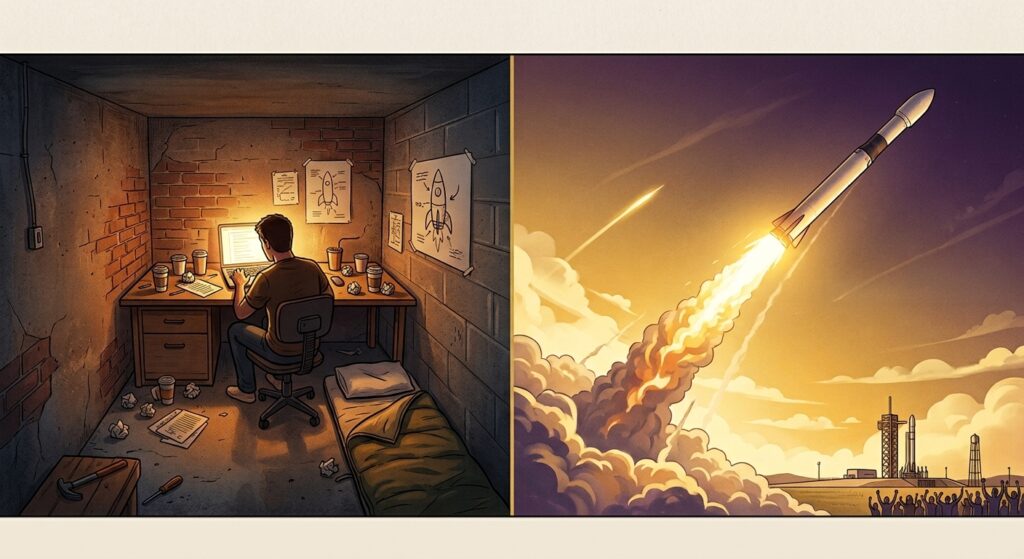
In 1995, a young South African immigrant walked into the lobby of Netscape, one of the hottest tech companies in the world at the time. He wanted a job. He had his resume ready. He stood in the lobby, waiting for someone to talk to.
Nobody came. And he was too shy to approach anyone.
He left without saying a word.
That young man’s name was Elon Musk. And because nobody at Netscape knew he existed, he went home and said the words that would change the trajectory of human history: “I guess I will just have to start my own company.”
What followed is one of the most remarkable track records ever built.
He co-founded Zip2 with his brother Kimbal. They could not afford rent, so they lived in their office and showered at the local YMCA. When Zip2 sold to Compaq for $307 million, Musk walked away with $22 million. He had been living with four housemates and had $10,000 in his bank account the day before the cheque arrived.
Most people would have bought an island and retired. Musk took almost every dollar and poured it into his next venture, X.com, which merged with Peter Thiel’s Confinity and became PayPal. When eBay acquired PayPal for $1.5 billion, Musk earned roughly $180 million.
And once again, instead of cashing out, he pushed everything into two of the most ambitious and ridiculously improbable companies the world had ever seen: Tesla, an electric car company at a time when nobody believed electric cars could work, and SpaceX, a private rocket company founded in a warehouse in El Segundo, California.
Fast forward to June 2026. SpaceX went public in what became the largest IPO in human history. The company raised $75 billion. It was valued at $1.5 trillion. And overnight, Elon Musk’s net worth crossed $1.1 trillion, making him the first trillionaire in human history.
But here is the part I need you to understand, because this is where personal branding becomes the most important skill you will ever develop.
Many of the institutional and retail investors who poured billions into SpaceX were not even particularly interested in space. What they were buying was Elon Musk. His track record. His brand. The perception, built over decades, that when this man says he will do something impossible, he has a documented history of actually doing it.
Analyst Dan Ives described the IPO as giving investors “another way to invest in the Musk ecosystem.” When polled, 68% of investors said they preferred SpaceX over Tesla for the next decade, not because they cared more about space than cars, but because they were investing in the person behind the brand.
And SpaceX’s vision itself proves why personal brand attracts massive opportunities. Musk identified that electricity is AI’s biggest bottleneck. Data centres are consuming more power than entire countries. His solution? Build solar-powered data centres in orbit, where the sun never stops shining. He filed with the FCC to launch up to one million satellites as an orbital AI computing network. That vision, which sounds like science fiction to most people, attracted $75 billion in a single IPO. Not because the idea was proven. But because the man behind it had a brand that said: “When I say I will do the impossible, I deliver.”
That is perception driving value. That is personal brand as a wealth asset.
And here is the connection I want you to sit with: You are as wealthy as the people who know you and believe in you.
Elon started with nobody knowing him. He was too shy to talk to anyone in a lobby. But every company he built, every bet he made, every time he delivered on an impossible promise, he was adding a layer to his brand. And by the time SpaceX went public, his personal brand alone was worth trillions in investor confidence.
You do not need to build a trillion-dollar company. But you need to understand that if your wealth strategy does not include building your personal brand, you are putting a ceiling on how much you can sell, how many rooms you can enter, and how much impact you can make.
The Girl Who Just Wanted to Share
Now, I know what some of you are thinking. “Miss Winnie, Elon Musk? That is too far from where I am. I cannot relate to that.”
Fair enough. So let me bring it closer to home.

There is a young Nigerian woman named Adeife Adeoye. She lost her mum when she was seven years old. Her family did not have money. She grew up watching her father make daily sacrifices just to keep the household running. At one point, they moved into an uncompleted building because they could not afford rent.
Growing up without money, as Adeife describes it, gives you a first-hand experience of a life without choice. Everything happens to you, not for you. And that reality made her obsessed, not with wealth for wealth’s sake, but with having the power to choose.
She started working at 14. Writing notes for her classmates. Earning about 2,000 naira a week. And for the first time in her life, she could buy the biscuit she wanted, when she wanted, on her own terms. It sounds small. But when you have never had choice, that first taste of it changes everything inside you.
Her father introduced her to freelancing, and that changed her world. Through freelancing she paid her hostel fees in university, she fed herself, she completed her projects, she funded her NYSC in Kano, she relocated to Lagos, she accommodated her sister for nearly a year. All from the income she earned through her skills and her laptop.
But here is where the personal brand part begins.
Adeife was earning money. She was comfortable. She was good at what she did. But nobody outside her immediate circle knew she existed. She was talented and invisible. And talent without visibility is like a shop with no signboard in a dark alley.
Then she decided to start sharing. Not from a place of expertise or polish or having it all figured out. She simply started posting about her journey. Her wins. Her failures. What she was learning. What was working. What was not. She says it herself: “I just wanted to share with women. Like, this is amazing. I went from having nothing to this. I need everybody to know.”
No team. No budget. No plan. No professional equipment. Just a phone and her story.
Within a year, she had 350,000 followers. Today, she has over a million across platforms. That community became Remote WorkHER, which is now Africa’s leading career platform for women. She has given two TEDx talks. She has partnered with global brands. She has literally changed the trajectory of thousands of women’s lives.
And when you ask her what she is, she does not say “I am a finance creator” or “I am a remote work expert.” She says, “I am just a girl that is sharing and building. I just want to see you win.”
That is personal brand in its purest, most powerful form. She did not wait until she “made it” to become visible. She built the brand while she was making it. And the brand accelerated everything.
If your excuse for not building your personal brand is “I do not have enough to share yet,” Adeife started sharing when she had a laptop and a freelancing income. If your excuse is “I do not have a team or a budget,” she built a million-person audience from her phone. Your excuse does not hold up.
Are You Talented but Invisible?
If this post is stirring something in you, do not let the feeling pass without action. Download the free Excellence Growth Tracker, print it, and start tracking your daily growth across three areas of your life. One of those areas should be your visibility. Three checkmarks a day. Thirty days and watch how your opportunities increase.
Are You Talented but Invisible?
If this post is stirring something in you, do not let the feeling pass without action. Download the free Excellence Growth Tracker, print it, and start tracking your daily growth across three areas of your life. Make visibility one of those areas. Three checkmarks a day. Thirty days. Watch the shift.
The Psychology You Did Not Know Was Running Your Decisions
I’m about to show you something that will make you think differently about every brand you have ever loved.
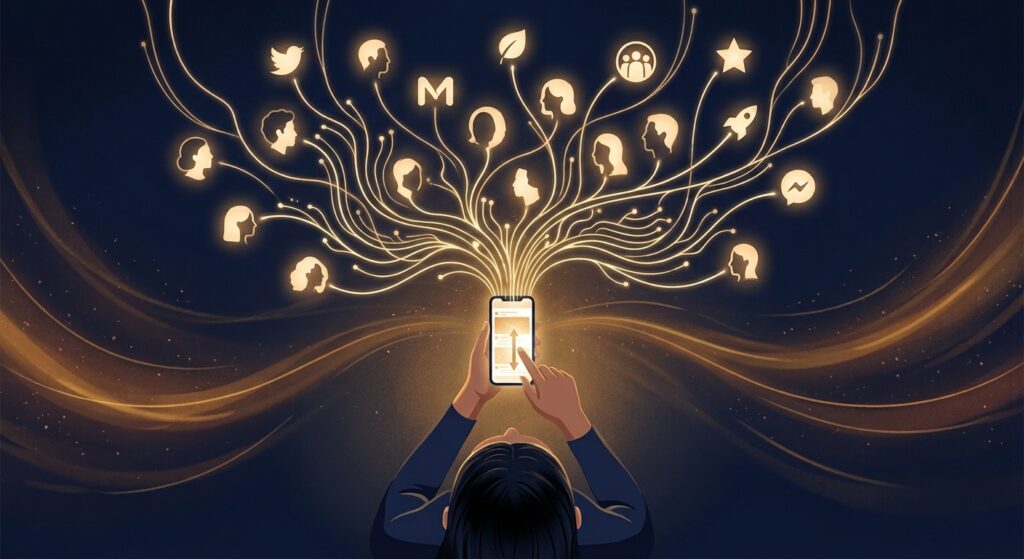
There is a concept in psychology called a parasocial relationship. It describes a one-sided emotional connection where an audience member feels a personal bond with a creator, despite never having met them. You feel like you “know” them. You trust their recommendations the way you would trust a close friend’s. You feel genuinely happy when good things happen to them and genuinely disappointed when things go wrong.
This is a deeply wired feature of the human brain. Research published in the Spanish Journal of Marketing found that parasocial relationships, the kind built when creators share personal stories, behind-the-scenes moments, and direct-to-camera conversations, directly increase trust and brand loyalty. They drive purchasing decisions at rates far exceeding traditional advertising.
In other words: when people feel like they know you, they buy from you. Not because your product is better than someone else’s, but because they trust you more than they trust someone else.
An Edelman study found that 81% of consumers say they need to trust a brand before they will make a purchase. Eighty-one percent. That means four out of every five people who encounter you or your business will not give you their money until they trust you. And trust, in this context, is not built by listing your qualifications. It is built by showing up consistently, sharing your story, letting people into your world, and giving them a reason to believe that you understand their struggle.
There is also something called the mere exposure effect. It is a psychological principle that says the more frequently someone is exposed to something, the more they tend to prefer it. This is why consistency in personal branding is so critical. Every time someone sees your face, reads your post, hears your voice, watches your story, their brain is quietly building a preference for you. Not because you said something revolutionary that day, but simply because you showed up again. And again. And again.
This is why Adeife grew to a million followers by just sharing. She was not running sophisticated marketing campaigns. She was activating the mere exposure effect by being consistently present. And over time, her audience’s brains moved from “Who is this girl?” to “I trust this girl” to “I want to buy from this girl.”
You are not just building a following. You are building neural real estate in people’s minds. And the more consistently you show up, the more space you occupy.
You Cannot Be Poor and Shy
Let me say something that might sting. But I say it because I care about where you are going.
You cannot be poor and shy at the same time.
If you have something to offer the world, whether that is a skill, a service, a product, a message, a ministry, hiding is not humility. Hiding is expensive. Every day you remain invisible, opportunities that were meant for you pass by because they could not find you.
Nobody cares about your product until they care about you. People buy from people they know, trust, and feel understood by. If they do not know you, they cannot trust you. And if they cannot trust you, they will not buy from you. It does not matter how good your offering is. A brilliant product in invisible hands stays unsold.
And here is something I want you to write down:
“Investors do not care about you. They care about whether people will care about you.”
The opportunities, the partnerships, the platforms, the doors that you are praying for, they open for people who have demonstrated that other people already trust them. Your personal brand is that demonstration. It is the evidence that you are worth investing in.
So if your wealth strategy, your career strategy, your purpose strategy does not include building your personal brand, you are building a beautiful house with no address. People cannot visit what they cannot find.
You have not been getting those opportunities. You have not been selected for that programme. You have not been invited into those rooms. And you wonder why. Could it be that you do not have an online track record that people can use to vet your expertise? Could it be that when someone Googles your name, nothing comes up? That is not bad luck. That is an invisible brand producing invisible results.
The “Just Be Myself” Trap
Now, before you rush off to post everything about your life on social media, I need to warn you about something.
One of the most common things I hear people say when they start thinking about personal branding is: “I just want to be myself. I do not want to be fake.”
And I understand that instinct. Authenticity is important. Nobody is asking you to create a fictional character. But here is the truth that “just be myself” overlooks: not every part of yourself needs to be online.
We all have parts of ourselves that belong in private. Parts that are still being worked on. Parts that are messy, unresolved, or simply not the version of you that serves your purpose or your audience. Sharing those parts indiscriminately is not authenticity. It is oversharing. And oversharing does not build trust. It often erodes it.
Before you step in front of that camera, before you write that post, before you hit publish, ask yourself this question:
“Who am I, and who do I want the world to perceive me as?”

That question is not about being fake. It is about being intentional. It is the same question that separates a diamond from a random stone. The stone and the diamond may both come from the earth, but one has been positioned as priceless and the other has been left in the dirt. The difference is not the substance. It is the presentation and the perception.
How you present yourself online will determine whether people perceive you as cheap or premium. Inconsistent posting, desperate-sounding captions, low-effort presentation, over-availability without value, these things signal “cheap” to the market, even if the substance behind you is exceptional. Consistent presence, intentional messaging, quality presentation, and strategic vulnerability, these things signal “premium.” And premium gets invested in. Premium gets invited into rooms. Premium gets remembered.
You are not being asked to be someone you are not. You are being asked to be the best, most intentional version of who you actually are. There is a world of difference between the two.
Build a World, Not Just a Profile
Here is a concept that will take your understanding of personal brand to a completely different level.
Copywriting expert Joanna Wiebe introduced an idea that I think every person building a brand needs to hear: your personal brand should be built like a fantasy world.

Think about your favourite fantasy novel. Lord of the Rings. Game of Thrones. Harry Potter. Whatever pulls you in. What makes those worlds so captivating that people read thousands of pages, watch hours of content, buy merchandise, and build entire communities around them?
It is not just the characters. It is the world itself.
Every great fantasy world has rules. Things the world believes, things it rejects, how problems are solved within that world. Your personal brand needs rules too. What do you stand for? What will you never compromise on? How do you approach problems? When people enter your world, they need to know what the rules are so they can decide if they want to stay.
The world exists beyond the main character. This is the biggest mistake people make with personal branding. They think it is all about them. But as Joanna says, it is about the person consuming what you are putting out. Your audience is the protagonist. You are the guide. The world you build must serve them, not just showcase you.
Great worlds have recurring landmarks. Winterfell. The Wall. King’s Landing. These are places readers return to, places that feel familiar and safe. In your brand, landmarks are your signature frameworks, your recurring themes, the concepts people associate with you. At Winnie’s School of Excellence, our M4 framework (Mindset, Mapping, Mastery, Manifestation) is a landmark. People know it. They reference it. They navigate by it.
Worlds have a villain. In your brand, the villain is the problem you are fighting against. For us, the villain is mediocrity, unfulfilled potential, the lie that says “this is all life has for you.” Every piece of content we create is a battle against that villain. When your audience knows what you are fighting, they know whether they want to fight alongside you.
Great worlds develop their own language. Think about how this works in brands you already know. When Nike says “Just Do It,” you do not hear a shoe commercial. You hear a philosophy.
When Apple users say “It just works,” they are not describing a feature. They are declaring allegiance. When someone in the fitness world says “No pain, no gain,” everyone in that world knows exactly what it means, and more importantly, they feel something when they hear it.
That is what brand language does. It creates shorthand that only the people inside your world fully understand. It turns phrases into identity markers. When someone uses “your” language, they are telling the world: “I belong here.”
At Winnie’s School of Excellence, our language includes phrases like “Don’t stop at great because greatness never stops.” When our community members use these phrases, they are not just quoting a mantra. They are signalling that they belong to a world that values excellence, growth, and purpose. The language becomes theirs, and in using it, they reinforce their own identity as someone who is building something meaningful.
Your brand needs this too. As you show up consistently, you will naturally develop phrases, frameworks, and ways of saying things that are uniquely yours. Pay attention to what resonates. When your audience starts repeating something you said back to you, that is your language forming. Protect it. Use it often. Let it become the vocabulary of your world.
And here is the most powerful part: in a well-built world, the audience does not just consume information. They gain citizenship. They do not just follow you. They belong to something. They become part of a community that shares values, language, and purpose. That is why the Excellence Elite community works. It is not a course. It is a world people choose to inhabit.
If you build your personal brand like a world, people will not just watch your content. They will want to live in it. And people who live in your world do not leave easily.
Show Up for Your Why, Not for Validation
Consistency is the engine that makes everything I have just described actually work. But I need to address the thing that kills consistency faster than anything else: showing up for the wrong reason.

If you are showing up for likes, for comments, for validation, you will quit the first week the numbers drop. Because validation is unpredictable. Some days the algorithm rewards you. Some days it ignores you. And if your fuel is external approval, you will run out of it fast.
But if you show up because you understand that there are destinies tied to you, lives that will not be transformed if you stay silent, potential that will remain untapped if you remain invisible, that reason will carry you through every low-engagement day, every post that nobody shares, every moment when you feel like you are talking to an empty room.
I show up because of the destinies attached to me. If I do not show up, they fail. That is my why. And it has nothing to do with how many people liked my last post.
Find your why for consistency. Let it be bigger than your ego. And watch how it sustains you when nothing else can.
And here is something you may not have considered:
Being consistent online holds you accountable to your own vision.
When you publicly declare what you are building, when you share your goals and your progress, you create a structure of accountability that private ambition simply may not match. The audience becomes a mirror that reflects back to you whether you are living up to what you said you would do. That is a gift, not a burden.
Inconsistency, on the other hand, sends a message too. It tells people that you do not have steady value to offer. It signals unreliability. And unreliable brands, personal or otherwise, do not get invested in.
Your Path Gets Clearer on the Way

I know some of you are still stuck because you feel like you do not have a polished enough message, a clear enough niche, or a professional enough setup to start building your personal brand.
Let me tell you what Adeife said about her own journey: “I was making it up as I was going.”
She did not have a content strategy. She did not have a niche. She did not have a brand kit or a posting schedule or a social media manager. She started by sharing what she knew, and her path got clearer the more she shared. The vision refined itself through the act of showing up, not before it.
By default, you are already standing out. There is no one else on this planet with your exact combination of experiences, skills, personality, and perspective. That thing you want to share, no matter how boring or basic you think it is, there is a community of people who want to see it presented exactly the way you would present it.
But they will never find you if you stay in your head.
Step out. Take action toward your fear. Present what you have. And watch your path get clearer with every step.
And remember: if an idea drops in your head, it means you have the capacity to pull it off. The distance between ideation and execution should be very short. Turn the things you hear into a to-do list in the now. That is how what you learn actually changes your life.
Stop Being Invisible
If this post has shown you that personal branding is not optional, do not let the conviction fade. Download the free Excellence Growth Tracker, print it, and make visibility one of the three areas you track daily. Every post you create, every connection you make, every time you show up, check the box. Thirty days of intentional visibility will change your life.
Stop Being Invisible
If this post has shown you that personal branding is not optional, do not let the conviction fade. Download the free Excellence Growth Tracker, print it, and make visibility one of the three areas you track daily. Every post you create, every connection you make, every time you show up, check the box. Thirty days of intentional visibility will change your life.
Your Personal Brand Is Not Vanity. It Is Stewardship.
Let me bring this home.
Your personal brand is not about ego. It is not about chasing fame or collecting followers for the sake of numbers. It is about stewardship.
God gave you gifts, talents, knowledge, and experiences for a reason. And that reason extends beyond you. There are people who need what you carry. There are lives that will be transformed by what you know. There are communities waiting to be built around the world only you can create. But none of that happens if you stay invisible.
Building your personal brand is how you express the grace of God upon your life to the world. It is how you ensure that the investment He made in you produces a return. It is not vanity. It is obedience.
Putting yourself out there is non-negotiable anymore. Not because the internet demands it. But because the assignment on your life demands it. The people connected to your purpose are waiting. And every day you delay is a day they go without what you were meant to give them.
If you are ready to stop being invisible and start building a personal brand that is intentional, strategic, and premium, the Art of Personal Branding course is designed for exactly this moment. It takes you from “I know I should be visible” to “I have a voice, a strategy, and a world people want to belong to.” This course is a mastery tool built for people who understand that visibility is the bridge between their purpose and their impact.
You Do Not Have to Build Alone
Building a personal brand in isolation is one of the hardest things you can do. The self-doubt, the imposter syndrome, the days when nobody engages, these things are amplified when you are carrying them by yourself.
That is why the Excellence Elite community exists. It is a space where people who are building their brands and their purpose come together to hold each other accountable, share wins and struggles, and get direct access to guidance that keeps them moving. When you are tempted to quit because the numbers are low, the community reminds you why you started. And when you win, they celebrate with you.
If your challenge is not visibility but communication, if you have the brand but you struggle to articulate your message with clarity and confidence, start with the Art of Speaking Eloquently and Elegantly or go deeper with the Art of Effective Speaking and Communication. Because the most visible brand in the world means nothing if you cannot speak when the door opens.
And if you need personalised, one-on-one guidance to build a brand strategy tailored to your unique gifts, your season, and your goals, the Vision-to-Reality 1-on-1 Consultation is where that happens. Click here to book a 1-1 consultation with me
In the next post, we are going to tackle the mastery skill that most people know they need but fail develop adequately: communication.
Specifically, how to speak with a clarity and confidence that makes people listen, trust, and remember you. Because you can have the strongest brand in the world, but if you cannot communicate your value when the opportunity arrives, the door closes before you even step through it.
Key Takeaways
- True value is not inherent. It is perceived. How you present yourself determines whether the world sees you as cheap or premium. Ask yourself: “Who am I, and who do I want the world to perceive me as?”
- Your personal brand is a wealth asset. You are as wealthy as the people who know you and believe in you. Elon Musk became the world’s first trillionaire not because investors were buying rockets, but because they were buying his brand and his track record.
- You do not need to wait until you “make it” to build a brand. Adeife Adeoye started sharing from her phone with no team, no budget, and no plan. She built a million-person community and Africa’s leading career platform for women by being visible while she was still building.
- Parasocial relationships drive purchasing decisions. When people feel they know you, they trust you. And 81% of consumers will not buy from someone they do not trust. Showing up consistently builds neural real estate in people’s minds.
- You cannot be poor and shy. If nobody knows you exist, nobody can buy from you, hire you, or invest in you.
- Not all of you belongs online. Authenticity is important, but oversharing is not authenticity. The difference between a diamond and a random stone is the presentation, not the substance.
- Build a world, not just a profile. Your brand should have rules, landmarks, a villain, its own language, and a community that gains citizenship, not just information.
- Show up for your why, not for validation. The destinies tied to you will fail if you stay silent.
- Your path gets clearer on the way, not before you start. Present what you have. The vision refines through action.
- Building your personal brand is not vanity. It is stewardship of the gifts God gave you and obedience to the assignment He placed on your life.
FAQ
I do not know what to post. Where do I even start?
Start with what you know and what you are currently doing. Adeife did not start with a content strategy. She started by sharing what she was learning and how she was earning. Post about what you are working on, what challenges you are facing, and what solutions you are finding. When you create content, talk to one person, not “hi guys.” Imagine you are sitting across from someone who needs exactly what you have. Speak to them.
People in my field are already doing what I want to do. How do I stand out?
By default, you already stand out. Nobody else has your exact story, your exact perspective, your exact combination of experiences. The internet does not need another generic voice. It needs yours. That thing you think is too boring or too basic, there is a community of people who will connect with it precisely because of how you present it.
I am an introvert. Personal branding feels like it is not for me.
Elon Musk was too shy to talk to anyone in a lobby. Adeife says she is “just a girl that is sharing.” Introversion is not a disqualification. You do not need to be loud. You need to be visible. Writing, recorded video, curated content, all of these allow you to build a brand without being the loudest person in the room.
How long before I see results from building my personal brand?
It depends on your consistency and the value you are providing. Adeife grew to 350,000 followers within her first year of serious content creation. But the point is not the timeline. The point is the compound effect. Every post is a brick. You may not see the building after the first ten bricks. But after a hundred, after five hundred, the structure becomes undeniable.
I tried posting content before but I gave up because nobody engaged.
Your consistency is not for the audience you have today. It is for the audience that is coming. The mere exposure effect means that every time you show up, even if engagement is low, you are building preference in the minds of the people who see you. The algorithm will catch up. But you have to outlast the silence. Show up for your why, not for the likes.
References
- Epstein, E. J. (1982). “Have You Ever Tried to Sell a Diamond?” The Atlantic.
https://www.theatlantic.com/magazine/archive/1982/02/have-you-ever-tried-to-sell-a-diamond/304575/ - International Gem Society. “Are Diamonds Rare?” — Confirms diamonds are among the most abundant gemstones on earth.
https://www.gemsociety.org/article/are-diamonds-really-rare/ - Clean Origin (2023). “Are Diamonds Rare?” — Details De Beers’ control of 75-85% of global supply and artificial scarcity strategy.
https://cleanorigin.com/blog/are-diamonds-rare/ - Lacap, J. P. et al. (2024). “Parasocial relationships and social media interactions: building brand credibility and loyalty.” Spanish Journal of Marketing – ESIC.
https://emerald.com/insight/content/doi/10.1108/SJME-09-2022-0190 - Edelman (2019). “In Brands We Trust?” 2019 Edelman Trust Barometer Special Report. https://www.edelman.com/ie/insights/edelman-trust-barometer-special-report-brands-we-trust
- Zajonc, R. B. (1968). “Attitudinal effects of mere exposure.” Journal of Personality and Social Psychology, 9(2, Pt.2), 1–27.
https://doi.org/10.1037/h0025848 - Tajfel, H., & Turner, J. C. (1979). “An integrative theory of intergroup conflict.” In The Social Psychology of Intergroup Relations. Brooks/Cole.
https://doi.org/10.1016/S0065-2601(05)37005-5 - Benzinga (2026). “SpaceX IPO Timing Is Right, Says Dan Ives: Offering ‘Expands The Ecosystem’ For Elon Musk Fans.” https://benzinga.com/z/49431371
- SpaceX FCC Filing (January 2026). Application to launch up to 1 million solar-powered satellite data centres for orbital AI computing.
https://www.fcc.gov/ecfs/search/search-filings (search: SpaceX orbital data centers) - Adeoye, A. (2026). Personal video testimony, “Promise you won’t cry when you watch this video.” YouTube. .
- Wiebe, J. “Why Personal Brands Should Be Building ‘Worlds’ Like Fantasy Books.” YouTube.
Recent Posts
-

What Is Your Personal Brand Telling People About You?
September 11, 2026 -

Your Growth is Not Optional: Why Skill Development is Your Best Offensive Weapon
September 4, 2026 -

Your Purpose Has a Plan. Now Do You Have the Grit to See It Through?
August 28, 2026 -

You Know Your Purpose. Now What? The 7-Step Blueprint to Turn a Burning Desire Into a Plan That Actually Works
August 21, 2026 -

Your Purpose Is Not Missing. It Is Disguised as Something You Already Do for Free
August 14, 2026